 +44 203 507 0033
Medical Device Software Development Services
Building software for medical devices is fundamentally different from building any other category of software. A bug in a financial application costs money. A bug in a clinical decision support tool or a remote monitoring platform can cost a patient's safety.
We design and build custom software for medical devices for medtech companies, digital health startups, and medical device manufacturers across the UK and US. Every system is designed against IEC 62304, ISO 13485, and the FDA regulatory requirements applicable to your device classification from day one.
Talk to our Geeks
No commitment. We respond within 1 working day.




Medical device software done right the first time costs less,
validates faster and reaches market sooner
The global software as a medical device market was valued at $30.26 billion in 2024 and is projected to reach $58.03 billion by 2030, growing at a CAGR of 11.46%. That growth is being driven by medtech companies that built their software correctly the first time. Not those who built fast and retrofitted compliance later, a strategy that consistently produces longer regulatory timelines, higher remediation costs, and in the worst cases, failed submissions.
North America contributed 41.87% of global software as a medical device revenue in 2024, underpinned by Medicare reimbursement codes and an FDA pipeline that already lists more than 520 cleared AI and ML devices. The regulatory landscape is becoming more sophisticated, not less. IEC 62304, ISO 13485, FDA 510(k), CE marking under the EU Medical Device Regulation, and the incoming AI Act all demand that medical device software engineering starts with a clear regulatory strategy, not a feature roadmap.
Geeks works with medtech companies and digital health businesses as a medical device software development company that treats regulatory compliance as an engineering discipline. We build the audit trails, the risk management documentation, the validation evidence, and the software architecture that your regulatory submission requires, in parallel with the development process rather than as a post-build exercise.
$58.03bn
Global SaMD market projected
by 2030
Source: 360iResearch
11.46%
CAGR of the software as a medical device
market 2025-2030
Source: 360iResearch
520+
AI and ML medical devices cleared by
the FDA pipeline
Source: Mordor Intelligence
41.87%
North America share of global SaMD
revenue in 2024
Source: Mordor Intelligence
What causes medical device software development projects to fail
before clinical validation
Regulatory compliance gets treated as a downstream task rather than an engineering requirement

The development partner does not understand device classification and its implications
Cybersecurity is treated as a feature rather than a design principle
The software validation strategy is incomplete or inconsistent with intended use
Integration with existing clinical systems creates undocumented risk
Medical device software development services we deliver for
medtech companies and digital health businesses
Every medical software development engagement covers a different combination of capabilities depending on your device classification, your regulatory jurisdiction, and the clinical environment your software will operate in. These are the areas we work in most consistently for medtech and digital health clients across the UK and US.
Software as a Medical Device Development (SaMD)
Medical Device App Development
Clinical Software and EHR Integration
AI-Powered Medical Device Software
Medical Device Software Validation and Regulatory Support
Legacy Medical Device Software Modernisation
Trusted by 850+ healthcare organisations
and enterprise businesses globally











Healthcare and clinical organisations we have built for

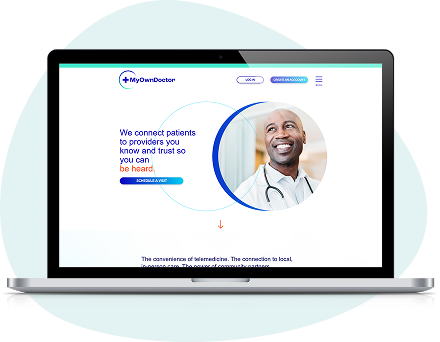
Developing MyOwnDoc, a secure healthcare platform connecting patients and doctors through real-time communication and data access

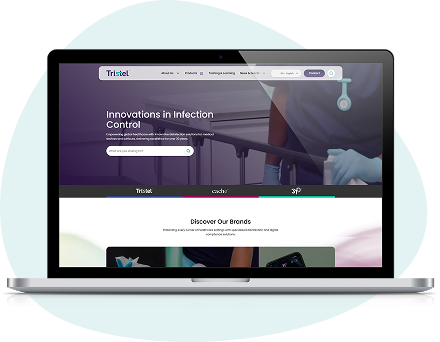
Digitising infection control with a voice-enabled mobile app that reduces cross-contamination risk

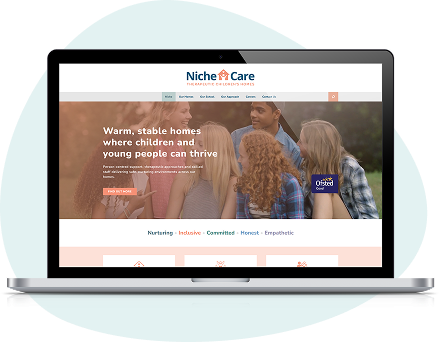
Designing a 12-18 month digital roadmap with 9 workstreams to help Niche Care scale rapidly and improve efficiency

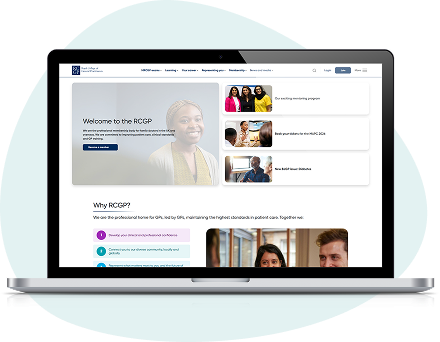
Building a secure ePortfolio platform that supports 42,000 doctors and streamlines the national GP revalidation process
How we structure medical device software development projects
from regulatory strategy to validated release
Every medical device software development project starts the same way. We establish your regulatory strategy before we design your software architecture.
Regulatory strategy and device classification review
- We review your intended purpose statement, your device classification, and the regulatory jurisdictions you are targeting before making any architecture or technology recommendations.
- We map the specific IEC 62304 software safety class, ISO 13485 quality management obligations, and FDA or MDR requirements applicable to your device so the development process is scoped correctly from the start, not corrected midway through.
Software architecture and risk management design
- We design your medical device software architecture around your device classification, your intended clinical use, and your integration environment using our proprietary wireframing tool VisualSpec.
- We produce your initial ISO 14971 risk management framework and your software development plan as outputs of this phase so your regulatory documentation starts being built alongside your software architecture, not after it.
IEC 62304 compliant development
- We build your medical device software development services in structured sprints with IEC 62304 process compliance built into every cycle. Software unit definition, integration, and verification evidence is generated as a standard output of each sprint rather than assembled at the end of the project.
- Traceability between requirements, architecture, code, and test evidence is maintained throughout the build so your technical file reflects the complete development history of every software item.
Validation and verification
- We produce medical device software validation plans, protocols, and reports aligned with your intended use statement and your device classification. Validation evidence covers the full range of clinical use scenarios your software will encounter, not just the nominal use path.
- Cybersecurity testing, penetration testing, and vulnerability documentation are executed as structured workstreams within the validation phase and documented to meet FDA and MDR cybersecurity submission requirements.
Regulatory submission support
- We work alongside your regulatory affairs team to produce the technical file artefacts, design history file documentation, and software-specific submission content your 510(k), De Novo, CE marking, or UKCA application requires.
- We do not hand your team a documentation package and step back. We stay engaged through the submission process to address any technical queries from the FDA, BSI, or notified body that relate to the software development evidence.
Post-market surveillance and software maintenance
- Medical device software does not stop being regulated after it is placed on the market. Post-market surveillance obligations, mandatory incident reporting, and periodic safety update reports all require ongoing software monitoring and documentation.
- We maintain the medical device software systems we build, managing updates through a change management process that preserves IEC 62304 compliance and generates the change documentation your post-market technical file requires.
Hear it from the people we have worked with

Our project was delivered on time and within scope and budget. We are very impressed with the outcome and very happy with our product.Read full story
Geeks provided clarity on critical facets of our business that required attention, aligning with our strategic objectives. This has not only fueled our roadmap but has become the cornerstone of our strategic planning. We’ve made significant strides in understanding the 'art of what's possible,' turning potential into actionable steps toward innovation and growth.Read full story

We wouldn't exist without Geeks' support.Read full story

Geeks has injected a new vigour into our digital transformation. The experience has been friendly, thorough and taken all of the staff on the journey. We look forward to the next exciting steps.Read full story

I want to congratulate everyone involved in this – it truly is genius in its transparency and simplicity. The platform is incredibly intuitive, which is critical with any new technological solution.Read full story

After more than 3 years of using their services extensively, I can safely say that Geeks are in a different league to most software developers you will find.Read full story
Awards, partnerships, and certifications











The technologies our medical device software development teams work with
Every medical software development company engagement has its own technical requirements depending on your device classification, your clinical environment, and your integration landscape. We select tools that fit your specific regulatory and technical situation.

Frontend Development
We design interactive and efficient interfaces that enhance user experience and improve application performance.

Backend Development
Our backend systems are designed for scalability, security, and integration with complex enterprise environments.

AI & Machine Learning
We leverage cutting-edge AI and machine learning frameworks to build intelligent solutions that automate processes, uncover insights, and drive business innovation.
Database and Cloud
We build data architectures that support real-time analytics and seamless connectivity across systems.

Mobile Development
We develop custom mobile applications for iOS and Android that maintain consistent performance across devices.
Testing & Quality Assurance
Every product undergoes rigorous testing to ensure stability, reliability, and long-term performance.
Book a Free Consultation
with Geeks
You'll love working with Geeks if...
- You want validation evidence built alongside development
- You need a partner who knows IEC 62304 and FDA from day one
- Your software architecture needs to fit your device classification from the start
- You need clinical integrations handled as a validated, documented workstream
- You are ready to start with regulatory strategy before writing a specification
What separates Geeks from other medical device software development companies
Medical device software development services require a partner who treats regulatory compliance as an engineering discipline rather than a documentation burden. The partner you choose determines whether your regulatory submission reflects software that was built correctly or software that was built and then documented to look compliant. Here is what Geeks brings to every medical device software engagement.
Geeks Business Evolution Flywheel
A proven model for compounding results, moving clients through vision, intelligent design, modernisation, and embedded adoption. Backed by multi-award-winning innovations.
The total tech ally for the AI age
We break through the barrier of fragmented suppliers by being your end-to-end partner. From strategy to design, engineering to AI integration, we deliver with the speed and personal attention the Big Four can’t match.
ROI-driven, barrier-breaking transformation
We break through the barrier of vague transformation promises by delivering measurable ROI, solutions proven in £, not just milestones. Guaranteed.
Medical Device Software Development FAQs
Medical device software development is the design, build, and validation of software intended for medical purposes, whether that is software embedded in a physical device, software that controls a device, or standalone software as a medical device that performs a medical function on a general-purpose platform. Medical device software engineering is distinguished from general software development by the regulatory standards it must satisfy, including IEC 62304 for software lifecycle processes, ISO 14971 for risk management, and ISO 13485 for quality management systems, alongside the market-specific requirements of the FDA, EU Medical Device Regulation, or UKCA scheme.
Software as a medical device is defined by the FDA and IMDRF as software intended to be used for one or more medical purposes that performs those purposes without being part of a hardware medical device. It includes clinical decision support tools, diagnostic apps, disease management software, and remote monitoring platforms. SaMD is regulated through the same frameworks as hardware medical devices, including IEC 62304, ISO 14971, and the FDA's software-specific guidance, with the specific requirements varying by the risk class of the medical function the software performs.
IEC 62304 is the international standard for medical device software lifecycle processes. It defines the development planning, requirements analysis, architectural design, implementation, integration, testing, and maintenance processes that medical device software must follow. Compliance with IEC 62304 is required for FDA 510(k) submissions, CE marking under the EU MDR, and UKCA applications. A medical device software development company that does not structure its development process against IEC 62304 from the start will produce software that requires costly remediation before it can support a regulatory submission.
Medical device software validation is a structured process that demonstrates your software performs its intended medical purpose consistently and safely across the conditions it will encounter in clinical use. Software testing verifies that code behaves as specified. Validation confirms that the specification itself is correct and that the validated software performs its medical function as intended. Both are required for a compliant medical software development project, but they serve different regulatory purposes and require different documentation artefacts.
Yes. AI and machine learning capabilities are increasingly embedded across our medical device software development services. We build AI capabilities for diagnostic assistance, clinical risk scoring, image analysis, and adaptive monitoring algorithms. Every AI model we develop for a regulated medical device context is built with FDA total product lifecycle documentation requirements in mind, with algorithm performance validation, bias assessment, and post-market monitoring plans produced as structured deliverables within the development project rather than added at submission stage.
Data protection compliance is designed into the architecture of every healthcare software development services engagement from the first design session. For US-market devices, we build against HIPAA technical safeguards requirements. For EU and UK market devices, we build against GDPR and the additional data protection requirements of the EU Medical Device Regulation. Where a device is intended for both markets, we design a data architecture that satisfies both regulatory frameworks without requiring separate codebases.
Timeline depends on your device classification, the complexity of your software, and your regulatory target markets. A Class A software as a medical device application with limited integration requirements can be delivered in months. A Class C medical device software development project covering AI-powered diagnostics, EHR integration, cybersecurity validation, and a full IEC 62304-compliant technical file takes considerably longer. Every project is scoped in detail before development begins so you have a clear timeline and cost that reflects your actual regulatory obligations rather than a generic estimate.
Yes. Legacy medical device software modernisation is a significant part of what we do for established medtech companies. We assess your current software against IEC 62304 and current cybersecurity requirements, identify the gaps between your existing technical file and current regulatory expectations, and produce a structured modernisation plan that maintains clinical continuity while bringing your software into compliance. Every modernisation engagement is managed as a regulated change process with full change management documentation.
We start with a conversation about your device, your intended purpose, your target markets, and your current regulatory position. From there we conduct a structured discovery and produce a detailed proposal covering scope, regulatory strategy, approach, timeline, and cost. No commitment is required for that initial conversation. Book directly at geeks.ltd/book-a-meeting.