 +44 203 507 0033
RPA in Manufacturing That Fits Your Operation
We design and build manufacturing workflow automation solutions that fit the way your operation runs. Not the way an RPA vendor's demo assumes it does. We map the process first, understand where the friction is, and build automation that works inside your existing systems without disrupting what is already functioning. It is one part of a broader manufacturing software development practice we have built over 18 years.
Talk to our Geeks
No commitment. We respond within 1 working day.




A manufacturing automation partner that maps your processes
before it automates them
Most RPA for manufacturing projects start in the wrong place. A tool gets selected, a vendor gets engaged, and the automation gets built around what the tool can do rather than what the business actually needs to fix. Six months later, the bot is running but the problem is still there in a slightly different form.
We work differently. Before we build anything, we spend time understanding which processes are genuinely costing you time and money, which ones are rule-based enough to automate reliably, and where automation will create real operational benefit rather than just technical activity. TSL Products identified a path to saving 32% of the time their team spent on manual tasks, not by automating everything at once, but by finding the right processes to target first.
As a Microsoft Solutions Partner and AWS Consulting Partner, with ISO 27001 certification and 18+ years of delivery experience, we have built process automation solutions for manufacturers, logistics operators, and financial services businesses across the UK and US. One team throughout.
Full accountability for outcomes, not just delivery.

If any of these manufacturing challenges sound familiar
you're in the right place
Your team spends hours on data entry that could be handled automatically

Your procurement process has too many manual touchpoints between request and order
Compliance and quality reporting takes your engineers away from the work that matters
Your systems do not share data, so your team reconciles it manually
Predictive maintenance is still reactive because the data is not being used
Manufacturing automation services built around your processes,
not our product catalog
Every manufacturer who comes to us has a different starting point. Some have a clear process they want to automate and need the right team to build it properly. Some know something is costing them time but have not yet identified exactly where the problem sits. Some have tried off-the-shelf RPA manufacturing tools and found that the implementation was harder than the vendor suggested.
As a full-cycle automation and software development company, we cover all of it. Process discovery, automation design, development, integration, testing, deployment, and long-term support. One team, one relationship, and accountability for outcomes not just code.


Procurement RPA and Purchase Order Automation




Trusted by 850+ manufacturing and SMBs globally











What our client say about working with Geeks on process automation

I have been MD / Owner of a few different businesses over the past 20 years, and I must say that the service delivery to date from Geeks has been the best I have ever experienced, from any service provider, of any form.Read full story

Geeks provided clarity on critical facets of our business that required attention, aligning with our strategic objectives. This has not only fueled our roadmap but has become the cornerstone of our strategic planning. We’ve made significant strides in understanding the 'art of what's possible,' turning potential into actionable steps toward innovation and growth.Read full story

Geeks have been always very professional in our dealings with them and provide us with a very solid product and support.

DiGence® really was exactly what we were looking for - as a client of the service, it was an affordable technology management consultancy. Rather than spending large variable costs and months reviewing, we got a report that was so helpful and created the confidence the business needed going forward.Read full story

Robbie is always learning and getting better, just like any other team member! It autonomously manages over 90% of incoming emails, achieving a flawless 100% accuracy.Read full story
We welcome difficult manufacturing problems
custom software development, done properly

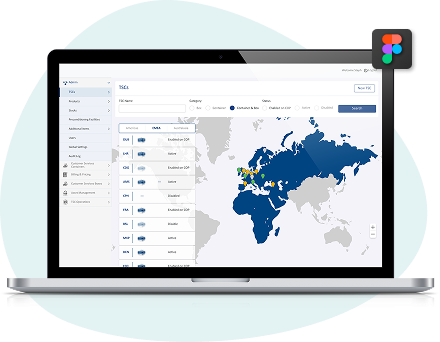
Centralising testing workflows across 230 global sites with a user-friendly application delivered on time and on budget
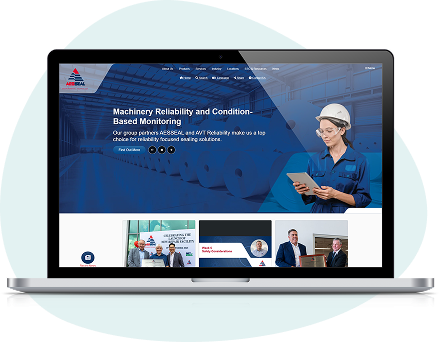

Digitally transforming operations across 40 global locations with a scalable logistics and customer service system

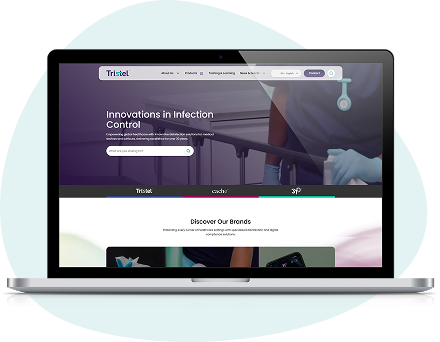
Digitising infection control with a voice-enabled mobile app that reduces cross-contamination risk

Building a unified AI and Data Strategy that aligns every department around measurable business goals


Creating a Digital Evolution roadmap projected to save 32% of time spent on manual tasks
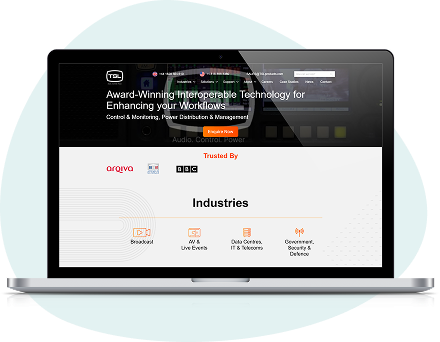

Cutting 16,964 hours of manual work each year with a data-backed Digital Diagnostics strategy

We have built process automation across industries that
carry real operational complexity
The manufacturers who come to us are not just buying automation expertise. They are buying 18+ years of experience building systems for industries where processes are complex, errors are costly, and the integration environment is never straightforward.
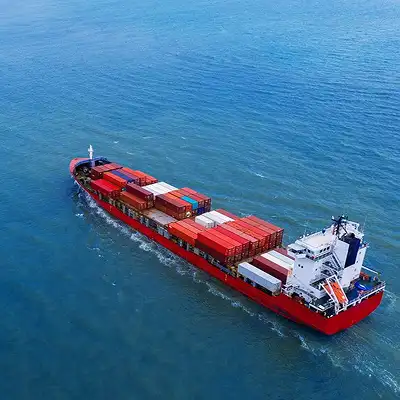
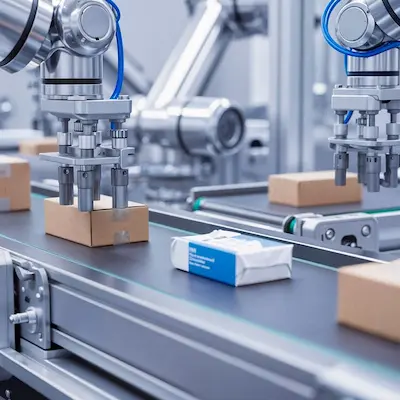
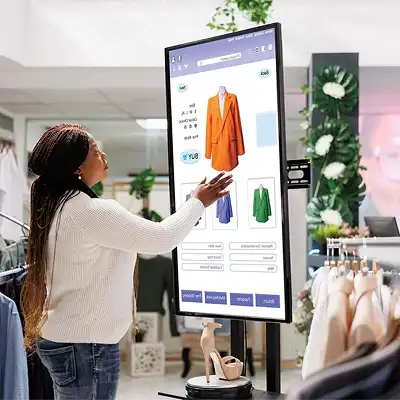
That experience comes from working across sectors that each carry their own compliance requirements, data constraints, and operational realities. Here are some of the industries where our robotic process automation and workflow automation teams have delivered.








Book a Free Consultation
with Geeks
- You'll love working with Geeks if…
- You're a changemaker
- You're not afraid to explore new ideas with a proven partner
- You treat technology as an investment
- You're eager to disrupt your industry with technology
What a manufacturing automation engagement with Geeks
actually looks like
Process discovery and mapping
- We identify and map every manual step in the target process, including the exceptions, the workarounds, and the edge cases that only become visible when you sit with the people who run the process every day.
- This step determines whether standard robotic process automation is the right tool, whether AI-powered automation is needed, or whether the process needs redesigning before it can be automated effectively.
Automation design and solution selection
- We design the automation architecture based on your specific processes, systems, and integration requirements, selecting the right tools and approach for your situation rather than defaulting to a preferred vendor.
- Interactive process designs are reviewed with your team before development begins so everyone can see exactly what the automation will do and how it will handle exceptions.
Development and integration
- The automation is built in two-week development cycles with working software demonstrated at the end of each sprint, so your team sees real progress regularly and can give feedback before the build is complete.
- Our team handles all integration with your existing ERP, warehouse systems, financial platforms, and any other data source the automation needs to connect to.
Testing in your operational environment
- Every automation is tested against real process data and real edge cases before it goes anywhere near your production environment, including parallel running where the automation and the manual process operate side by side until confidence is established.
- We test for accuracy, exception handling, system performance under load, and failure recovery, because manufacturing workflow automation that fails unpredictably is more disruptive than the manual process it replaced.
Deployment and go-live
- We manage the cutover planning, the team training, and the go-live coordination so the transition does not disrupt your operation mid-shift.
- Your team understands what the automation is doing, how to monitor it, and what to do when an exception is flagged, so the handover is clean rather than dependent on us being available.
Monitoring, support, and iteration
- We monitor the automation's performance after go-live, fix issues as they surface, and extend the automation to cover additional processes as your confidence and appetite grows.
- RPA use cases in manufacturing rarely stay contained to the first process. Most clients extend their automation programme as they see the first results.
Awards, partnerships, and certifications













What manufacturers actually find when they choose
Geeks as their automation partner
There is no shortage of RPA companies and automation vendors. Most will demonstrate a tool, configure a bot against your most visible process, and move on to the next client. The problem is not finding someone who can automate a process. The problem is finding a partner who understands your operation well enough to identify which processes should be automated first, experienced enough to handle the integration complexity that always emerges mid-project, and committed enough to still be improving the automation when your processes change six months after go-live.
That is what the manufacturers who choose Geeks are looking for. Here is what they find.
Geeks Business Evolution Flywheel
A proven model for compounding results, moving clients through vision, intelligent design, modernisation, and embedded adoption. Backed by multi-award-winning innovations.
The total tech ally for the AI age
We break through the barrier of fragmented suppliers by being your end-to-end partner. From strategy to design, engineering to AI integration, we deliver with the speed and personal attention the Big Four can’t match.
ROI-driven, barrier-breaking transformation
We break through the barrier of vague transformation promises by delivering measurable ROI, solutions proven in £, not just milestones. Guaranteed.
The technologies our manufacturing
automation teams work with
Every RPA in manufacturing industry project has its own technical requirements. We select the tools that fit the problem rather than defaulting to a preferred platform. As a custom software development and AI implementation company with 18+ years of production experience, our automation work is backed by hands-on expertise across each technology below.

Frontend Development
We design interactive and efficient interfaces that enhance user experience and improve application performance.

Backend Development
Our backend systems are designed for scalability, security, and integration with complex enterprise environments.

AI & Machine Learning
We leverage cutting-edge AI and machine learning frameworks to build intelligent solutions that automate processes, uncover insights, and drive business innovation.

Database and Cloud
We build data architectures that support real-time analytics and seamless connectivity across systems.

Mobile Development
We develop custom mobile applications for iOS and Android that maintain consistent performance across devices.

Testing & Quality Assurance
Every product undergoes rigorous testing to ensure stability, reliability, and long-term performance.
RPA in Manufacturing FAQs

RPA in manufacturing refers to software that handles rule-based, repetitive processes that currently require a person to execute them. In a manufacturing context, this typically includes purchase order processing, production reporting, quality and compliance documentation, supplier data management, inventory updates, and invoice processing. The key criterion is that the process follows consistent rules. If the same inputs reliably produce the same outputs and the steps do not change based on judgement, it is a candidate for robotic process automation in manufacturing.
Standard robotic process automation works well for processes that are fully rule-based and involve structured data. It follows a defined sequence of steps exactly as instructed. AI-powered automation adds the ability to handle variation, interpret unstructured data such as emails or documents, and make decisions based on patterns rather than fixed rules. If you want to understand how this works on a shop floor specifically, AI agents in manufacturing covers the distinction in practical terms. For many manufacturing RPA applications, standard RPA is the right tool. For others, particularly those involving supplier communications, quality inspection data, or predictive maintenance software manufacturing use cases, AI-powered automation delivers better results. We assess which approach is appropriate for each specific process before recommending a solution.
The most common RPA use cases in manufacturing we see are: purchase order and invoice processing, production scheduling and shop floor data capture, quality and compliance reporting, material traceability documentation, supplier onboarding and data management, customer order processing and status updates, and inventory reconciliation across multiple systems. Procurement RPA is particularly high-value because the procurement process typically involves many manual steps across multiple systems and a high volume of repetitive transactions.
Most manufacturing workflow automation needs to read from and write to an existing ERP system. We build the integration layer that connects the automation to your ERP, whether that is SAP, Microsoft Dynamics, a custom-built system, or a legacy platform that predates modern API standards. Integration requirements are identified in the discovery phase and designed into the automation architecture from the start, not treated as an afterthought once the bot is already built.
Yes. Procurement RPA is one of the highest-value applications in manufacturing because procurement workflows typically involve high transaction volumes, multiple approval steps, and data that needs to move between supplier systems, internal approval tools, and the ERP. Automating purchase request routing, PO generation, supplier confirmation matching, and invoice reconciliation removes significant manual effort and reduces the error rate that comes with repetitive data entry across multiple platforms.
Predictive maintenance software manufacturing systems monitor the data your machinery already generates, including temperature, vibration, cycle counts, and energy consumption, and apply algorithms that identify patterns associated with impending failures. Rather than maintaining equipment on a fixed schedule or waiting for something to break, your maintenance team gets an early warning with enough time to act before production is disrupted. We build custom predictive maintenance software that integrates with your existing machinery data sources and delivers alerts and reports in a format your maintenance team can act on.
A focused manufacturing RPA project targeting a single well-defined process can be delivered in six to ten weeks. More complex programmes covering multiple processes, legacy system integration, or AI-powered automation components typically take three to six months. We will give you a realistic timeline based on your specific processes and environment during the initial consultation, not an optimistic estimate designed to win the project.
Yes. RPA for manufacturing scales to the size of the business. Smaller manufacturers often have the most to gain from automation because the manual processes consume a higher proportion of a smaller team's capacity. We scope and price our automation engagements to suit the stage of growth and the realistic budget of the business, and smaller manufacturers get the same rigour of discovery, design, and testing as our largest clients.
We monitor the automation's performance after go-live, fix issues as they surface, update the automation when your underlying processes or systems change, and help you extend the programme to additional processes as your confidence grows. Robotic process automation manufacturing deployments are not static. Processes change, systems get updated, and the automation needs to keep pace. We stay engaged to make sure it does.
Automation in a manufacturing context generally rests on four connected capabilities. Understanding where each one applies helps leadership teams decide where to invest and in what order.
- Process automation is the starting point for most businesses. It handles the repeatable, rule-based tasks that currently require a person to execute them. Purchase order processing, compliance reporting, data entry between systems. This is where robotic process automation in manufacturing typically begins, and where the fastest return on investment tends to come from.
- Data and analytics automation is about making sure the right information reaches the right people without someone compiling it manually. Automated reporting, real-time production dashboards, and scheduled data reconciliation across systems. When your leadership team is waiting for a Monday morning report that someone spent Friday afternoon building, this is the pillar that fixes it.
- Decision intelligence is where automation moves beyond executing tasks and starts supporting judgement. Predictive maintenance alerts that flag equipment issues before they cause a stoppage. Demand forecasting that adjusts to real purchasing patterns. AI-powered quality inspection that surfaces anomalies faster than a manual check. This is the pillar where machine learning and AI extend what standard RPA can do and where connecting RPA to a custom MES gives your production team the live data layer these decisions depend on.
- Integration and connectivity underpins all three of the above. Automation that cannot connect to your existing systems, your ERP, your machinery, your supplier portals, is automation that cannot do its job. The integration layer is not the most visible part of an automation programme, but it is the one that determines whether the rest of it works reliably in a live operational environment.
Most manufacturers start with the first pillar and move into the others as confidence and capability build. The businesses that see the most from their automation investment treat these four areas as connected rather than separate projects.
RPA stands for Robotic Process Automation. In a manufacturing context, it refers to software that replicates the steps a person would take to complete a rule-based task, moving data between systems, generating documents, triggering approvals, without a human doing it manually each time. The word "robotic" does not refer to physical robots on a production line. It refers to a software robot that follows a defined set of instructions and executes them the same way every time. RPA in manufacturing is used across procurement, quality documentation, production scheduling, invoice processing, and supplier management. Any process that is repetitive, follows consistent rules, and involves moving or transforming data is a candidate.
Procurement RPA is the application of robotic process automation to the purchasing processes that sit between a business need and a fulfilled order. In most manufacturing businesses, that chain involves significant manual work. Purchase requests routed by email, POs raised by someone re-entering data that already exists in another system, invoices matched by hand against the original order. Automating those steps shortens the procurement cycle, reduces error rates, and gives your team visibility of every request in real time, without the back-and-forth that currently slows the process down. For manufacturers with high transaction volumes, the cumulative time saving is substantial.
Book a free consultation. We will spend time understanding your manufacturing operation, which processes are costing you the most time and resource, and what good looks like for your business. From there, we will give you a clear view of the right starting point and what the engagement would involve before you commit to anything.