 +44 203 507 0033
Custom Facilities Management Software Development
Most facilities management systems are bought with good intentions and abandoned within a year. The work order module does not match how your team logs jobs. The asset tracking requires manual updates nobody has time to do. The compliance dashboard looks reassuring in a demo and useless on a Monday morning when an engineer cannot find the last service record for a boiler that stopped working overnight.
We build custom facilities management software for organisations managing buildings, campuses, and multi-site operations globally. Systems designed around the actual pace and complexity of FM work, not around what looks good in a product brochure.
Talk to our Geeks
No commitment. We respond within 1 working day.




The gap between how FM software works in a demo
and how it performs on a Monday morning
Facilities management is genuinely unpredictable. Planned maintenance, emergency call-outs, compliance deadlines, and space requests all land at once, through different channels. Most FM platforms were built for steady-state operations. Real working weeks are not a steady state.
So work orders get chased by phone because nobody trusts the status. Asset records fall behind. Compliance certificates end up in a spreadsheet.
We spend time with your team before we design anything, understanding how work actually gets logged, how engineers communicate in the field, and where your current facilities management system breaks down. The software we build comes out of that conversation.
As a custom software development company with 18+ years of delivery experience, we are a Microsoft Solutions Partner and AWS Consulting Partner, and we hold ISO 27001 certification because operational data inside a facilities management system cannot afford to be treated as a configuration option.

If any of these facilities management pain points sound familiar
you’re in the right place
Reactive maintenance is costing you three times more than it should

You don't really know the condition of all of your assets
Compliance documents live everywhere except where you need them
Your contractors still have to call the office first
You manage multiple sites and none of them are visible in the same place
What we build for facilities teams, operations managers, and FM businesses
Some clients come to us with a clear brief. Others know their current facility management system is not working but have not yet identified exactly which part to fix first. Some are building a facility management platform as a product to take to market. The starting point in every case is the same: spending time with the people who manage the facilities before designing anything.



Compliance & Planned Maintenance Scheduling


Trusted by 850+ businesses globally











What facilities and operations businesses say about working with Geeks

Robbie is always learning and getting better, just like any other team member! It autonomously manages over 90% of incoming emails, achieving a flawless 100% accuracy.Read full story

The AI Opportunity Discovery workshop with Geeks challenged our ways of thinking and unlocked a treasure trove of innovative ideas and helped to craft a strong business case that we're now eagerly exploring.Read full story

We reached out to Geeks to design and build an online booking system and within weeks, it was integrated with our job management system. Now, residents can book and reschedule appointments at their convenience, which has not only improved our efficiency but also the customer experience. We're really pleased with the solution.Read full story

Geeks and their team have been incredible with the extra support our business has needed and because of this, we are entering phase two with positive excitement.Read full story

If you're searching for a developer who can offer a bespoke software solution, look no further. Geeks is simply the best and second to none.Read full story
FM software we have built.
What it changed on the ground.
Facilities management is a discipline where the gap between how a system looks in a demo and how it performs on a Tuesday when three contractors are on site and a compliance deadline is approaching tells you everything. These projects started with real operational problems and the solutions are in daily use.

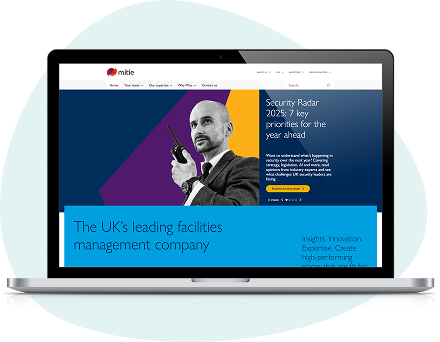
Developing a Lean Six Sigma-driven cleaning management system that cuts process time and resource waste across MITIE’s blue-chip clients

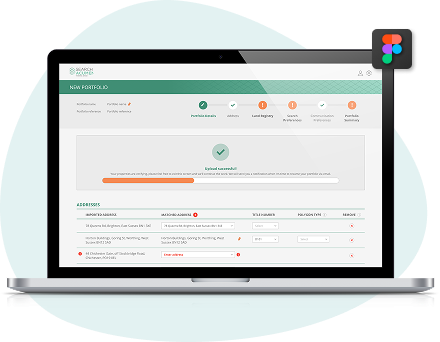
Powering 100,000+ property searches monthly through an AI-driven SaaS platform that automates complex legal processes.

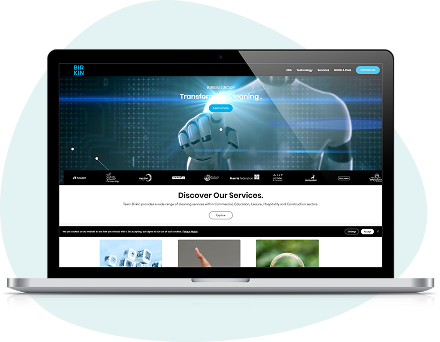
Defining Birkin Group’s digital transformation roadmap through an AI Opportunity Discovery workshop

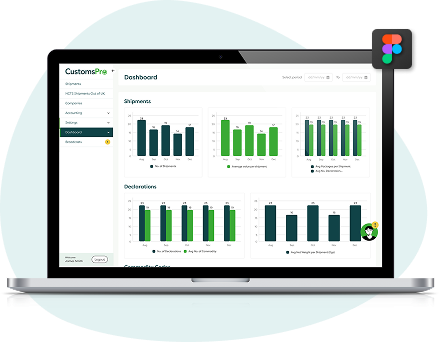
Delivering CustomsPro in 6 weeks to handle a 3000% surge in UK import and export entries

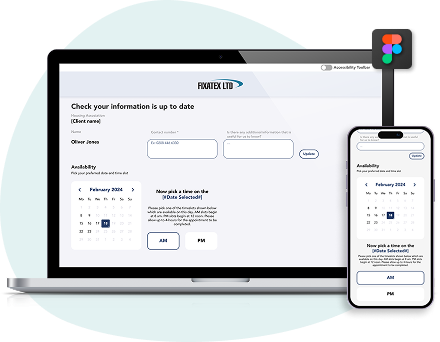
Replacing 100 daily calls with a self-serve booking system delivered in weeks

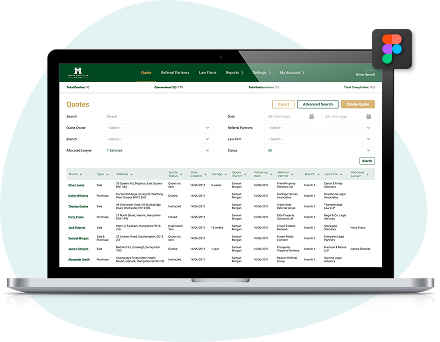
Designing a unified management portal that accelerates property transactions and redefines service in legal tech
How we build facilities management software that holds up in real operational conditions
The test of any facility management system is not how it performs in a controlled demo. It is how it performs when a reactive emergency comes in at the same time as a planned maintenance window, a contractor cannot find the right access information, and a compliance expiry has just been flagged. We design for those conditions from the start.
Operational discovery with the people who actually do the work
- We spend time with your engineers, helpdesk staff, contractors, and managers before designing anything, specifically to understand where the current facilities maintenance software breaks down under real operational pressure rather than ideal conditions.
- This step surfaces the edge cases, the workarounds, and the informal processes that never make it into a requirements document but determine whether software gets adopted or abandoned.
System design and field-tested prototyping
- We design the system around your workflows and build interactive prototypes that your FM team tests in realistic scenarios before development begins.
- A facility maintenance management software system that your engineers use daily needs to be as fast on a mobile screen in a plant room as on a desktop in the office. We test for both.
Integration architecture
- We map every system your facilities management solution needs to connect to, contractor management platforms, building management systems, accounting software, CAFM systems, and IoT sensors, and design the integration layer before development begins.
- Integrated facility management system architecture built properly from the start avoids the expensive integration failures that come from treating connectivity as a post-launch consideration.
Development in two-week cycles
- Working software demonstrated every two weeks. Not a status update. Your FM team sees the actual system, tests it against real scenarios, and gives feedback that shapes the next sprint.
- Cloud based facility management software that your team has shaped during development is significantly more likely to be used after launch than software that arrives fully formed.
Deployment and go-live
- We manage the data migration from your existing facility management system, parallel running during the transition period, and go-live coordination so your compliance records and asset history are intact from day one.
- Cutover for an FM system needs specific care around live compliance obligations and in-progress work orders. We treat that as a first-order concern.
Post-launch development
- Facilities portfolios change. Buildings are added, disposed of, or repurposed. Compliance requirements evolve. New asset types need to be tracked.
- The building facility management software we build grows with your portfolio, and the team that built it is the same team you work with when requirements change.
Book a Free Consultation
with Geeks
You need custom FM software if…
- Reactive maintenance keeps eating your budget
- Asset records are incomplete or out of date
- Compliance documents are scattered across systems
- Contractors still have to ring the office for basic information
- You manage multiple sites with no single view across them
We have built complex operational systems across many industries.
Facilities management is one of them.
The organisations that come to us are buying 18+ years of experience building software where the stakes are real. Systems used by people under time pressure, in demanding physical environments, where a failure in the software has direct operational consequences.
That experience comes from working across industries that each carry their own complexity. A facilities team benefits from the same rigour we applied building a logistics automation system, a multi-site operational platform, or a compliance-critical healthcare application. Here are some of the sectors where we have built and shipped complex operational software.











Awards, partnerships, and certifications















What makes a development partner different
from a facilities management software vendor
A facility management software vendor sells you access to a system built for a general market. A development partner builds you one that works for your specific buildings, your specific team, and your specific way of managing maintenance and compliance. In FM, that distinction matters more than most sectors because the software is used by people who are often working in physically demanding conditions, under time pressure, with minimal tolerance for systems that do not do exactly what they expect.
The FM teams that come to Geeks have typically already tried the vendor route. Here is what they find when they work with us instead.
Geeks Business Evolution Flywheel
A proven model for compounding results, moving clients through vision, intelligent design, modernisation, and embedded adoption. Backed by multi-award-winning innovations.
The total tech ally for the AI age
We break through the barrier of fragmented suppliers by being your end-to-end partner. From strategy to design, engineering to AI integration, we deliver with the speed and personal attention the Big Four can’t match.
ROI-driven, barrier-breaking transformation
We break through the barrier of vague transformation promises by delivering measurable ROI, solutions proven in £, not just milestones. Guaranteed.
The technologies our facilities management software teams work with
Every facilities management system project has different technical requirements. The asset types it needs to model, the contractor systems it needs to integrate with, the number of sites it needs to support from day one. We select the tools that fit the operational reality of your environment.

Frontend Development
We design interactive and efficient interfaces that enhance user experience and improve application performance.

Backend Development
Our backend systems are designed for scalability, security, and integration with complex enterprise environments.

AI & Machine Learning
We leverage cutting-edge AI and machine learning frameworks to build intelligent solutions that automate processes, uncover insights, and drive business innovation.

Database and Cloud
We build data architectures that support real-time analytics and seamless connectivity across systems.

Mobile Development
We develop custom mobile applications for iOS and Android that maintain consistent performance across devices.

Testing & Quality Assurance
Every product undergoes rigorous testing to ensure stability, reliability, and long-term performance.
Facilities Management Software FAQs

Facilities management software built properly handles the operational reality of FM work, not just the planned version of it. That means a facilities work order system that captures reactive and planned work in the same place, with status visible to everyone involved without manual updates. Facility asset management software that updates automatically through job completion rather than requiring separate data entry. A facility compliance system that stores certificates against assets and surfaces expiry dates before they become breaches rather than after. And facilities management mobile apps that engineers actually use in the field because they work as well on a phone in a plant room as on a desktop in an office.
CAFM software (Computer-Aided Facilities Management) is the category term for software that manages the operational and administrative functions of facilities management. Most CAFM products are subscription platforms designed for a general market. They cover the common requirements well and fall short on the specific requirements of your operation. A custom facility management platform is built around your specific asset types, compliance obligations, contractor relationships, and reporting structure. There are no modules you pay for and do not use, no workarounds forced by the product architecture, and no dependency on the vendor's roadmap for the features your operation actually needs.
Yes. Facilities management software for schools and universities share a specific set of requirements that general FM platforms handle inconsistently. Statutory compliance around fire safety, asbestos management, and legionella is more tightly scrutinized in educational estates. Space management and room booking sit alongside maintenance management in a way that most FM tools treat as separate modules. Safeguarding requirements affect how contractor access is managed on site. We design for those requirements as first-order considerations rather than compliance add-ons.
Yes. Healthcare facility management software and hospital facility management software carry compliance and documentation obligations that are significantly more demanding than most other sectors. HTM guidance, CQC inspection readiness, medical gas servicing records, backflow prevention certificates. These are not edge cases in healthcare FM, they are core operational requirements. Healthcare facilities management software built without those requirements embedded in the architecture is a system that creates compliance risk rather than managing it.
An integrated facilities management system gives each site its own operational environment while making the entire portfolio visible from a single management view. Engineers at each site log work orders and update asset records within their site context. Managers and directors see consolidated reporting across all sites, with the ability to drill down to any individual building, asset, or work order. Compliance status is visible at portfolio level so nothing falls through the gap between sites. Enterprise facility management at that level requires architecture designed for multi-site from the start, not a single-site system with a reporting module bolted on.
Yes. Facilities preventive maintenance software functionality is one of the most consistently requested capabilities in FM software projects. Planned maintenance tasks generated automatically based on asset type, service intervals, and statutory requirements. Tasks assigned to the right contractor or in-house engineer with the right tools and certifications. Completion records logged against the asset with supporting documentation attached. Facility maintenance scheduling software that your engineers trust because it gives them the right information at the right time, and that your managers trust because the completion record is reliable rather than aspirational.
A facilities management solution that manages contractors properly gives them access to the information they need, in the field, without requiring a call to your helpdesk. The work order, the asset history, the access arrangements, the relevant compliance documentation. It captures their time on site and the work completed in a format your management team can verify. And it manages their certification and insurance documentation in the same place as the work they carry out, so contractor compliance is part of the operational record rather than a separate administration burden.
A facilities ticketing system or facilities helpdesk software handles the front end of work request management. Someone reports a fault, it gets logged and assigned, and the status is tracked to completion. A full facilities management system does all of that and connects it to the asset the fault relates to, the compliance obligations associated with that asset, the contractor who carries out the repair, and the management reporting that tells you how your maintenance spend is tracking against budget. A ticketing system manages requests. An FM system manages the operation.
A focused module, a work order and helpdesk system, a compliance tracking tool, or an asset register migration, can typically be delivered in eight to twelve weeks. A full facilities management solution covering work order management, asset tracking, planned maintenance scheduling, compliance documentation, contractor management, and multi-site reporting typically takes four to eight months depending on the number of integrations and the size of the portfolio it needs to support. We will give you a realistic timeline based on your specific situation during the initial consultation.
Book a free consultation. We will spend time understanding your facilities operation, the buildings and assets you manage, how your current facility management system is and is not working, and what your team actually needs from a replacement or new-build system. From there we will give you an honest view of the right approach before you commit to anything.