 +44 203 507 0033
Custom Logistics Automation Software
Your logistics operation runs on processes. Some of those processes need a person. Many of them do not. We identify the ones your team should stop doing manually and build custom logistics automation software that handles them with greater speed, accuracy, and consistency than a manual process ever could.
Geeks has built automated logistics software solutions for freight operators, third-party logistics providers, and enterprise logistics teams globally since 2007. Every system starts with your operation, your workflows, and the specific processes costing your team the most time.
Talk to our Geeks
No commitment. We respond within 1 working day.




The logistics processes running on manual effort are the ones
holding your operation back
Logistics businesses operate some of the most process-heavy environments in any industry. Shipments get booked, documented, tracked, and invoiced thousands of times a week. Each of those steps involves data moving between people, systems, and partners. And in most operations, a significant portion of that movement still happens manually.
Manual processing of shipping documentation alone creates an average delay of two to four hours per document, and errors in that process cost logistics companies significant amounts annually in disputed billing, misdirected shipments, and compliance failures. The average logistics operation is only 43% digitized. That gap is where your team's time and your margin are disappearing.
Custom logistics automation software does not replace your people. It takes the high-volume, rule-based work off their desks so they can focus on the decisions and relationships that actually need a human. We design and build automated logistics software solutions that fit exactly how your operation runs today and scale with where it is going.

The logistics workflows we automate
Automation is only valuable when it is applied to the right processes. We spend time mapping your operation before recommending anything, identifying where manual effort creates the most delay, the most error, and the most cost. These are the areas where custom software for logistics management consistently delivers the most measurable return.





Trusted by 850+ businesses globally











What businesses say about working with Geeks

Robbie is always learning and getting better, just like any other team member! It autonomously manages over 90% of incoming emails, achieving a flawless 100% accuracy.Read full story

I have been MD / Owner of a few different businesses over the past 20 years, and I must say that the service delivery to date from Geeks has been the best I have ever experienced, from any service provider, of any form.Read full story

Geeks provided clarity on critical facets of our business that required attention, aligning with our strategic objectives. This has not only fueled our roadmap but has become the cornerstone of our strategic planning. We’ve made significant strides in understanding the 'art of what's possible,' turning potential into actionable steps toward innovation and growth.Read full story

Geeks have been always very professional in our dealings with them and provide us with a very solid product and support.

After more than 3 years of using their services extensively, I can safely say that Geeks are in a different league to most software developers you will find.Read full story
We welcome difficult problems
Custom software development, done properly

Prototyping easyJet’s “Inspire Me” tool to validate a new digital experience for millions of travelers


Digitally transforming operations across 40 global locations with a scalable logistics and customer service system

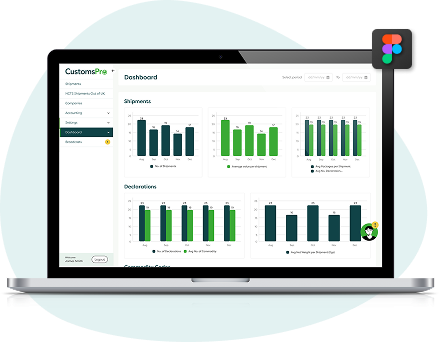
Delivering CustomsPro in 6 weeks to handle a 3000% surge in UK import and export entries

Reducing manual workload by 50% through a secure data access portal built in weeks
What your logistics operation looks like
after the manual work is removed
These are the operational shifts our clients consistently experience once the right processes are automated.

Your team re-keys data from emails, checks it manually, and books through carrier portals one shipment at a time.

Orders move from confirmation to booked shipment without anyone touching a keyboard. Faster, more accurate, and consistent at any volume.
Your team prepares customs documents manually under time pressure. Errors only surface when customs queries them.
Documents are generated from your operational data, validated, and filed automatically before a person needs to review them.
Getting a status update means checking multiple systems and calling the carrier directly.
Status flows into one place automatically. Exceptions surface without anyone going to look for them.
Performance reports take someone hours to compile from systems that were never designed to connect.
Leadership accesses live operational data whenever they need it. Nobody compiles it for them.
More volume means more people doing the same manual work at higher cost.
Your operation handles increased volume through the same system without a proportional increase in headcount or cost.
Book a Free Consultation
with Geeks
- You'll love working with Geeks if…
- You're a changemaker
- You're not afraid to explore new ideas with a proven partner
- You treat technology as an investment
- You're eager to disrupt your industry with technology
How a logistics automation project with Geeks actually works
Process discovery
- We map every step in your target workflow with the people who actually run it, including the exceptions and workarounds that only become visible when you sit with the team doing the work.
- This determines which processes are ready to automate, which need redesigning first, and which should stay manual.
Automation design
- We design the automation logic around your specific workflows, carrier integrations, and compliance requirements using our proprietary wireframing tool VisualSpec, so your team can see exactly how it will work before development begins.
- We match the technical approach to the problem, not the other way around.
Development and integration
- We build in two-week sprints and demonstrate working automation at the end of each cycle, so your team gives feedback when it is still easy to act on.
- We handle all carrier API connections, customs system integrations, and ERP links as part of the build.
Testing on real operational data
- Every workflow is tested against real shipment volumes and edge cases from your operation before going near your live environment, including parallel running alongside your existing manual process.
- We test specifically for the failure scenarios that matter most in logistics, carrier downtime, validation failures, and mid-project regulatory changes.
Go-live and handover
- We plan the cutover around your shipment calendar. Go-live happens when your team is ready and the system has proven it can handle your volume without errors.
- Your operations, documentation, and finance teams understand the exception workflows before go-live, not on the day of it.
Ongoing support and iteration
- Carrier APIs update. Regulations change. Your operation grows. We stay involved to keep your automation current and extend it as your operation evolves.
- Most engagements grow significantly after the initial build once teams see what becomes possible with the foundational processes running automatically.
Your industry has specific rules.
Our software development teams already know them.
We have delivered custom automation software across a range of industries, each with its own compliance requirements, data environments, and operational pressures. Whatever sector you operate in, the approach is the same: we learn how your operation runs before we build anything.









Awards, partnerships, and certifications














What businesses find when they bring Geeks
to automate their logistics operation
Logistics automation projects fail more often from poor process understanding than from poor technology. A developer who does not know how a freight operation works will automate the wrong things, in the wrong order, and create more problems than they solve. Here is what makes working with Geeks different.
Geeks Business Evolution Flywheel
A proven model for compounding results, moving clients through vision, intelligent design, modernisation, and embedded adoption. Backed by multi-award-winning innovations.
The total tech ally for the AI age
We break through the barrier of fragmented suppliers by being your end-to-end partner. From strategy to design, engineering to AI integration, we deliver with the speed and personal attention the Big Four can’t match.
ROI-driven, barrier-breaking transformation
We break through the barrier of vague transformation promises by delivering measurable ROI, solutions proven in £, not just milestones. Guaranteed.
The technology our logistics automation teams work with
We select the tools that fit your logistics operation and integration environment. Every freight management software development project has different technical requirements, and we do not default to a preferred stack. Our engineers have production experience across the technologies below.

Frontend Development
We design interactive and efficient interfaces that enhance user experience and improve application performance.

Backend Development
Our backend systems are designed for scalability, security, and integration with complex enterprise environments.

AI & Machine Learning
We leverage cutting-edge AI and machine learning frameworks to build intelligent solutions that automate processes, uncover insights, and drive business innovation.

Database and Cloud
We build data architectures that support real-time analytics and seamless connectivity across systems.

Mobile Development
We develop custom mobile applications for iOS and Android that maintain consistent performance across devices.

Testing & Quality Assurance
Every product undergoes rigorous testing to ensure stability, reliability, and long-term performance.
Custom Logistics Automation Software
Developement FAQs

Logistics automation software replaces manual, repeatable processes within a logistics operation with automated workflows. This includes shipment booking and creation, customs documentation, carrier selection, invoice processing, warehouse task management, and operational reporting. A custom-built system goes further than a generic platform by automating the specific processes within your operation rather than providing standard modules your team has to configure around their actual workflows.
Off-the-shelf logistics management software is designed for a broad range of logistics operations and automates the most common process patterns. It works well when your workflows match what the platform was built for. Custom logistics automation software is designed and built around your specific carrier network, documentation requirements, compliance obligations, and the systems you already use. Your team gets automation that fits the way your operation actually runs, not a tool they adapt their processes to fit.
The processes that deliver the most return from automation are high-volume, rule-based, and repeatable. In most logistics operations this includes shipment creation and booking, customs documentation generation and filing, carrier rate comparison and selection, invoice matching and reconciliation, warehouse task assignment and tracking, and operational reporting. We identify the highest-value automation opportunities in your specific operation before recommending what to build, rather than applying a standard list.
Yes. Integration with your existing systems is a fundamental part of how we work. Most logistics operations run across a mix of ERP platforms, warehouse management systems, carrier portals, and customs filing tools that were not built to share data. The automated logistics software solutions we build connect those systems at the data layer, so information flows between them automatically rather than being moved manually by your team.
This depends entirely on the scope and complexity of what needs automating. A focused build automating a single high-volume process such as customs documentation or shipment booking can be delivered in a matter of months. A broader logistics management platform covering multiple automation areas and integrations across a complex carrier network takes longer. Every project is scoped in detail before development begins, so you have a clear timeline and cost from the start.
A logistics management system software platform manages and provides visibility across logistics operations. Logistics automation software goes further by removing manual steps from those operations entirely. The two are often built together. A logistics management platform gives your team the visibility to see what is happening across their operation, and automation removes the manual work that was previously required to make it happen.
Yes. We build AI logistics software capabilities into logistics systems where they add genuine operational value. This includes intelligent document processing that reads and extracts data from shipping documents without manual input, demand and route pattern recognition that surfaces planning recommendations, and exception classification that flags the shipments needing human attention while letting the rest process automatically. AI is applied where it improves the accuracy or speed of automation, not as a default feature.
Yes. Customs and trade documentation automation is one of the most impactful areas we work in. We build systems that generate, validate, and file customs documentation automatically using data from your operational systems, removing the manual re-entry and checking steps that create delays and errors. We have direct experience building customs automation for cross-border freight operations, including systems that adapt to regulatory changes as they come into force.
Digital logistics software refers to systems that replace paper-based and manually operated logistics processes with connected digital workflows. This covers everything from electronic shipment booking and digital documentation through to automated carrier management and real-time operational reporting. Digitising a logistics operation is often the first step before automation is applied, and the two are typically delivered together in a custom build.
We start with a conversation about your operation, the processes you want to automate, and the systems you currently use. From there we conduct a detailed scoping exercise and produce a proposal covering approach, timeline, and cost. There is no commitment required to have that initial conversation. Book directly at geeks.ltd/book-a-meeting.