 +44 203 507 0033
A Dedicated Software Development Team That Ships Every Two Weeks From Day One
We embed a complete, AI-powered product team directly into your business. Named people, clear accountability, and software shipping every sprint. We call it Team-as-a-Service, or TaaS.
Software developer, technical lead, project manager, QA engineer, and business analyst. Self-managing. From day one.
Talk to our Geeks
No commitment. We respond within 1 working day.




Hiring a developer is not as straightforward as it sounds
Most mid-market businesses don't have a software problem. They have a delivery problem. The ideas are there. The ambition is there. What's missing is the capacity to turn priorities into working products consistently, without the whole thing depending on one person not handing in their notice.
And yet hiring is still the first instinct. You post the role. Two months pass. You interview, you offer, you wait out a notice period. On day one they need onboarding, context, and three weeks to find their feet. You are now three months in, nothing has shipped, and your competitors, some of them now running AI-augmented teams that move twice as fast, have not been waiting.
That is the optimistic version. What you have actually built is a single point of failure with a salary attached. One skill set. One person between your product and a standstill. And when they leave, and eventually they will, the knowledge leaves with them.
In an era where AI is compressing timelines, raising the bar on output, and giving leaner teams the leverage that used to require much larger ones, concentrating your entire delivery capability in a single hire is not just a risk. It is a strategic choice you probably haven't consciously made.
The question is not whether you need more tech capability. It is whether one hire is still the right way to get it in the age of AI.

If any of these pain points sound familiar
you’re in the right place
You have a backlog that keeps growing

Your whole codebase lives in one person's head
You're paying agency rates for project-based work with no continuity
Your in-house team has no capacity for more work
You need to move fast, but you can't afford the wrong call
One embedded team. Full accountability. Fortnightly shipping.
One monthly cost.
This is not outsourcing. It is a named, embedded product team that learns your business, works inside your processes, and ships software every two weeks without you having to manage them.


850+ global small and mid-market businesses trust us












What our clients say about our software
development services

I was impressed with how well Geeks interpreted our complex requirements to give us an effective, user-friendly solution.

We’ve been blown away by the product you have created.
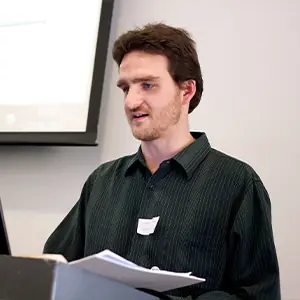
After more than 3 years of using their services extensively, I can safely say that Geeks are in a different league to most software developers you will find.Read full story

In celebrating our collaboration with Geeks, we are delighted to express our utmost satisfaction with the implementation of SubNet, our new Construction Management Application.Read full story

Not only do you end up with a quality product, but the experience is the most stress-free we’ve ever experienced in an IT project.

If you're searching for a developer who can offer a bespoke software solution, look no further. Geeks is simply the best and second to none.Read full story
We welcome difficult problems.
Custom software development, done properly
We have been building software for businesses since 2007. Here are a few success stories of what an embedded team relationship looks like over time, and what it delivers.

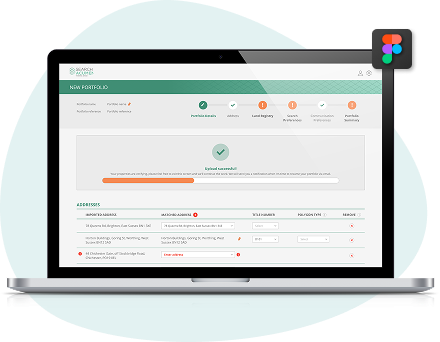
Powering 100,000+ property searches monthly through an AI-driven SaaS platform that automates complex legal processes.

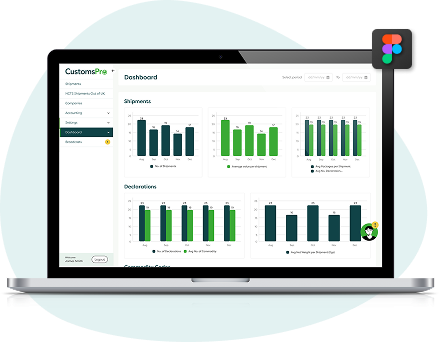
Delivering CustomsPro in 6 weeks to handle a 3000% surge in UK import and export entries

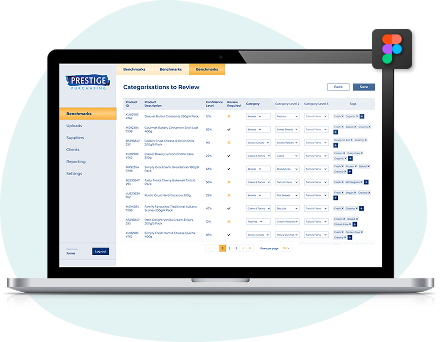
Turning a two-week manual process into minutes with a bespoke AI application built for precision and speed
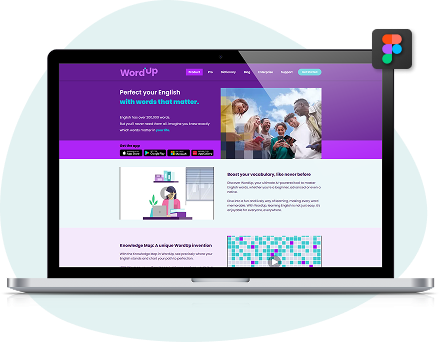
Boosting revenue by 38% with AI tutors that deliver hyper-personalised English learning at scale
One hire versus a full team
The capability gap is the real story
Most businesses frame this as a cost comparison. That is the wrong question. The right question is: what do you actually get, and what happens when something goes wrong?
One developer has one day's capacity, one skill set, and one notice period that ends everything. A dedicated team has redundancy built in. When your developer is deep in a build, your QA engineer is already running regression tests. When your account manager is away, your project manager holds the relationship. The machine does not stop.

3-4 months
Job post, interviews, notice period, onboarding

2 weeks
Discovery Sprint delivers roadmap in 14 days
1 person
5 named specialists
You manage them
We self-manage
AM and PM included in the team
Separate hire required
UI/UX designer included
You have one person who knows your codebase
You have a team that knows your product better than anyone
One resignation ends it
Built-in redundancy across five specialists
You own it
We own it
Choose the right team model for your stage
Different businesses need different levels of speed, continuity, and strategic support. These three team models give you a sensible starting point, a growth path, and room to scale when the time is right.
Why TaaS and not the alternatives
Every option has a catch. Here is an honest breakdown.
You have multiple options. A traditional agency. A freelance platform. An in-house hire. Staff augmentation. Even AI tools that promise to replace developers altogether. We have no interest in telling you those options do not exist. But we will tell you honestly what each one costs you that does not appear on the invoice.
- Traditional agency: New project briefing every time. No continuity. No skin in your product's long-term success.
- Freelance platforms: You coordinate everything. You manage quality. You are the project manager and the client simultaneously.
- Staff augmentation: You manage them like employees. Same overhead, less commitment from them.
- Single in-house hire: £80-130k all-in. One skill set. One notice period. One point of failure.
- No-code / AI tools: Template-based solutions that break at complexity. Not built for the integrations your business actually needs.
- Geeks TaaS: A self-managing team with its own AM and PM. Embedded into your business. Accountable for delivery, not just hours.

Start with a Discovery Sprint
not a risky retainer
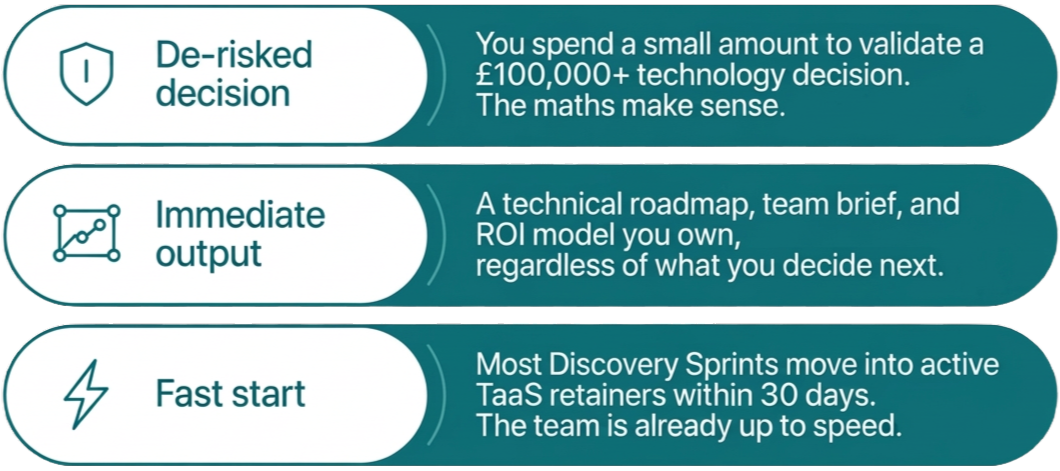
A fixed-price starting point for businesses that need clarity before they commit. You get the plan, the shape of the team, and a sharper view of what comes next, before you are asked to make a bigger technology decision.
We do not ask you to jump into a monthly retainer on day one. We start by understanding your business, your current tech, and the outcomes you want to drive. That gives us the context to challenge assumptions, spot delivery risks early, and shape the right path forward.
By the end of the sprint, you leave with a clear project plan, a technical audit, and a team structure built around your priorities. It is a smarter way to buy software delivery. No pressure. No lock-in. Just a clearer picture of what is possible and what it will take to get there.
Book a Free Discovery Call
A dedicated team could be the right move if...
- Your backlog keeps growing, but your team can't clear it
- You need delivery certainty, not just more headcount
- Key features keep getting delayed
- You're ready to treat software as a growth driver
Your industry has specific rules.
Our software development teams already know them.
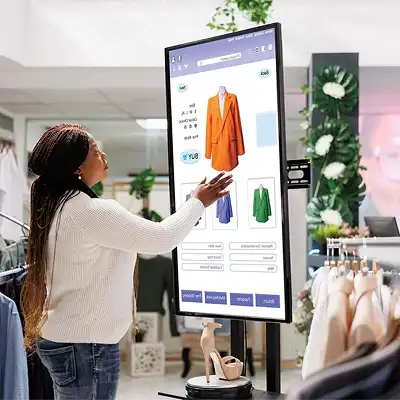
We have built and shipped applications across a wide range of sectors. That experience changes how a project runs from the very first conversation. We already understand the compliance requirements, the integration constraints, and the operational realities specific to your industry. You spend less time explaining context and more time making progress.
These are the sectors where our software developers have delivered.











Awards, partnerships, and certifications











Why businesses choose Geeks as their
software development partner
There is no shortage of app development agencies. Most will take your brief, quote a timeline, and start building. The problem is not finding someone who can build an app. The problem is finding a partner who cares enough to tell you when the brief is wrong, experienced enough to handle what goes wrong mid-project, and reliable enough to still be there when you need something changed six months after launch.
That is what the businesses that choose Geeks are actually looking for. Here is what they find.
Geeks Business Evolution Flywheel
A proven model for compounding results, moving clients through vision, intelligent design, modernisation, and embedded adoption. Backed by multi-award-winning innovations.
The total tech ally for the AI age
We break through the barrier of fragmented suppliers by being your end-to-end partner. From strategy to design, engineering to AI integration, we deliver with the speed and personal attention the Big Four can’t match.
ROI-driven, barrier-breaking transformation
We break through the barrier of vague transformation promises by delivering measurable ROI, solutions proven in £, not just milestones. Guaranteed.
The technical stack our development
teams use
Every project has its own requirements and we pick the tools that fit the problem. As a total tech development company with 18+ years of production experience, we have shipped enterprise apps using every technology below. Our development services and web platform builds are backed by deep expertise across each stack.

Frontend Development
We design interactive and efficient interfaces that enhance user experience and improve application performance.

Backend Development
Our backend systems are designed for scalability, security, and integration with complex enterprise environments.

AI & Machine Learning
We leverage cutting-edge AI and machine learning frameworks to build intelligent solutions that automate processes, uncover insights, and drive business innovation.
Database and Cloud
We build data architectures that support real-time analytics and seamless connectivity across systems.

Mobile Development
We develop custom mobile applications for iOS and Android that maintain consistent performance across devices.
Testing & Quality Assurance
Every product undergoes rigorous testing to ensure stability, reliability, and long-term performance.
Development Team as a Service FAQs

Not in the way most people mean it. Outsourcing typically involves handing work to a distant team with minimal integration into your business. TaaS is an embedded model. Your team is in your Slack, your sprints, and your product conversations. The difference in outcome is significant.
TaaS works well alongside existing internal resources. Your in-house person often becomes the technical authority and domain expert, while the TaaS team handles build capacity and QA. It is a complement, not a replacement.
We handle it. Turnover is our problem, not yours. We replace team members and manage the transition. Your retainer does not change, and your delivery cadence does not stop.
Every two weeks, the team delivers a defined set of work. The sprint is planned collaboratively at the start of the cycle, reviewed together at the end, and prioritised around what your business needs most right now. You never go more than two weeks without seeing progress.
Yes. Our tier structure is designed for exactly that. Businesses that start on Starter often grow into Growth. If your workload reduces for a quarter, we can discuss adjusting the engagement. The minimum commitment terms apply, but within those, the relationship is built to flex.
We have extensive experience in logistics and supply chain, professional services, healthcare and MedTech, construction, property and PropTech, financial services, and education. The TaaS model works wherever there is a consistent need for software capability.
A two-week engagement producing a full technical roadmap, a detailed team brief outlining who would build what, and an ROI projection based on your specific workstream and business context. You own all of it.
You do. If we build it for your business, the IP belongs to you. Your software, your product, your advantage.
Yes. You are not renting your product from us. You have full ownership of the codebase created for your project, so your business stays in control.
That depends on the tier and what you are trying to achieve, but typically it includes software development, product management, QA, and DevOps. The point is simple: you get a delivery team, not just one pair of hands.
We start with a Discovery Sprint, and that can begin within days of sign-up. The goal is to get clear fast, then move into delivery with a plan that makes sense.
Staff augmentation gives you extra people to manage. A dedicated software team gives you a joined-up delivery function with clear accountability, defined roles, and momentum from day one.
That is exactly why the Discovery Sprint exists. We assess the current state, understand the technical reality, and build a plan around what you already have rather than pretending everything starts from zero.
Yes. We can support modernisation, integrations, backlog reduction, and new feature delivery. If the software matters to your growth, it is worth improving properly.
It is best for businesses that need to move faster, reduce hiring risk, clear product backlogs, or add reliable software capability without building a large internal team from scratch.
Book a free consultation. We will discuss your business challenge, your current systems, and what you need built. From there, we outline an approach, a realistic timeline, and a ballpark investment. No commitment required.