 +44 203 507 0033
AI in Real Estate That Solves Real Operational Problems
Real estate businesses do not need more noise. They need faster decisions, cleaner data, less manual work, and better visibility across the workflows that actually drive growth.
That is where AI starts to earn its place.
We help property businesses design, build, and integrate AI solutions that fit how they already work. From document-heavy processes and reporting bottlenecks to fragmented systems and service delays, we turn AI into something practical, measurable, and built around commercial outcomes.
Talk to our Geeks
No commitment. We respond within 1 working day.




Why AI in real estate matters now
Real estate runs on information, but too much of that information is still trapped in inboxes, PDFs, spreadsheets, legacy systems, and manual handoffs. When data, documents, and reporting sit across disconnected tools, teams lose time, context, and momentum fast.
The result is familiar. Skilled people spend too much time chasing updates, reviewing documents, duplicating work, and working around software that no longer fits how the business actually operates.
That creates more than admin frustration. It slows service delivery, weakens visibility, and makes growth harder because every improvement depends on more manual effort rather than better systems.
This is why AI in real estate matters now. Applied properly, it helps property businesses reduce repetitive work, improve document-heavy workflows, connect fragmented data, and give teams more time to focus on decisions, service, and growth.

If any of these pain points sound familiar
you’re in the right place
Your teams are buried in manual admin

Your property data is fragmented and hard to trust
Your current software forces workarounds
Document-heavy processes are slowing transactions
You are missing opportunities hidden in your data
Change is happening faster than your systems can respond
AI services for real estate businesses
From AI strategy and automation to bespoke platforms and systems integration, we help property businesses apply AI where it creates real operational and commercial value. Every service is shaped around your workflows, your systems, and the outcomes your business actually cares about.





Trusted by 850+ property and enterprise businesses globally












What property businesses say about working with Geeks

Robbie is always learning and getting better, just like any other team member! It autonomously manages over 90% of incoming emails, achieving a flawless 100% accuracy.Read full story

The AI Opportunity Discovery workshop with Geeks challenged our ways of thinking and unlocked a treasure trove of innovative ideas and helped to craft a strong business case that we're now eagerly exploring.Read full story

We reached out to Geeks to design and build an online booking system and within weeks, it was integrated with our job management system. Now, residents can book and reschedule appointments at their convenience, which has not only improved our efficiency but also the customer experience. We're really pleased with the solution.Read full story

Geeks and their team have been incredible with the extra support our business has needed and because of this, we are entering phase two with positive excitement.Read full story

If you're searching for a developer who can offer a bespoke software solution, look no further. Geeks is simply the best and second to none.Read full story
We're trusted by ambitious property and technology businesses
We work with organisations that see technology as a growth lever, not just a back-office tool. That includes businesses building smarter property services, improving internal operations, and creating better digital experiences for customers and teams.

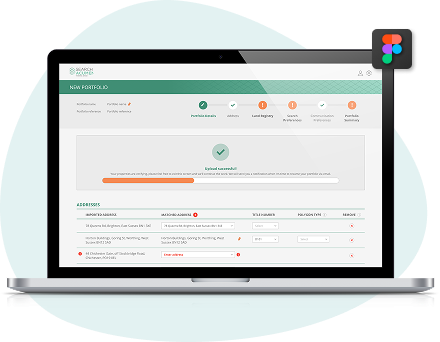
Powering 100,000+ property searches monthly through an AI-driven SaaS platform that automates complex legal processes.

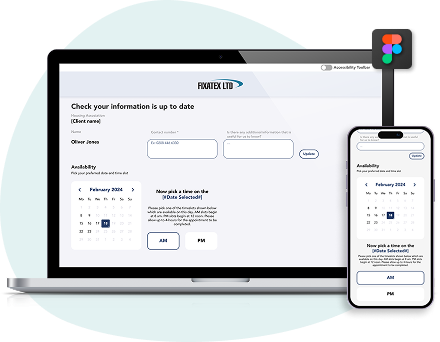
Replacing 100 daily calls with a self-serve booking system delivered in weeks

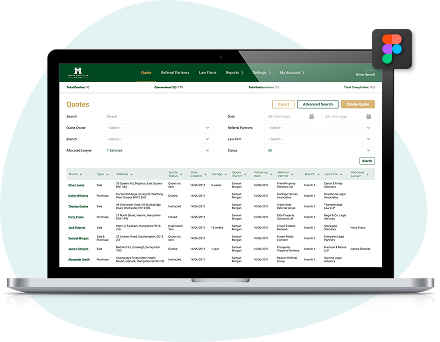
Designing a unified management portal that accelerates property transactions and redefines service in legal tech

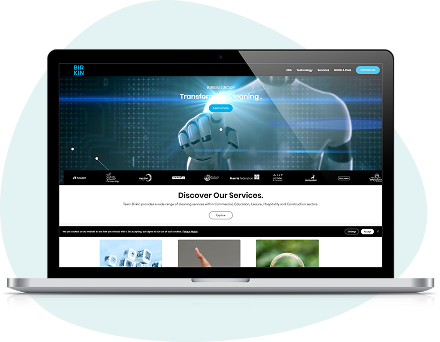
Defining Birkin Group’s digital transformation roadmap through an AI Opportunity Discovery workshop

Developing a Lean Six Sigma-driven cleaning management system that cuts process time and resource waste across MITIE’s blue-chip clients
How our AI software development process works
The steps below are the same whether you are building a property management software development system for an internal team or an AI product for the open market. The sequence is deliberate. Each stage produces something the next stage depends on.
Discovery and domain mapping
- We document your workflows, data sources, user types, portal integrations, and compliance obligations before any design work begins.
- For real estate software development projects, this step also identifies where the current system breaks down under real operational conditions, not ideal ones.
Architecture and integration design
- We define the data model, API layer, and integration plan for every system the software needs to connect to, including property portals, MLS platforms, CRM tools, accounting software, and any legacy systems that need to remain in place.
- Real estate software integration designed at the architecture stage is reliable. Integration retrofitted after build is the most common source of cost overruns in software projects.
UX design and prototyping
- We design interfaces around the actual tasks each user type performs, then build interactive prototypes tested with real users before production code is written.
- In real estate app development services, this step validates that the mobile experience works in the field conditions property professionals operate in, not just a test environment.
Development in two-week cycles
- Working software is demonstrated at the end of every sprint. Your team reviews it, gives feedback, and that feedback shapes the next cycle.
- Nothing is held back until go-live. You see real progress throughout the build, not a finished product you are seeing for the first time.
Testing and cutover
- Security testing, performance testing under realistic load, and a full data migration from your existing system are completed before go-live.
- For property businesses with live transactions and active client relationships, cutover timing and risk are planned as carefully as the build itself.
Post-launch development
- The version of your platform that serves the business at launch will need to evolve as your market changes, your team grows, and new compliance requirements emerge.
- We continue developing alongside you. The team that built the system is the team you call when something needs to change.
Book Your Free AI Consultation
with Geeks
You'll love working with Geeks if…
- You are dealing with fragmented property data
- Your teams are stuck in manual workflows
- You want to explore AI in real estate
- You need a tech partner who knows the industry well
We have built complex software across the industries
The depth we bring to real estate software development comes partly from working in the sector for 18+ years, and partly from the range of industries we have delivered in alongside it. Architecture decisions, data modelling, compliance thinking, and integration complexity in one sector inform how we approach problems in another. Here are the industries where our development teams have shipped production software.We have also built systems outside property. Here are some of the sectors where our custom CRM software development and client management teams have delivered.












Awards, partnerships, and certifications















What makes Geeks a different kind of
AI software development company
Most development agencies approach a new sector project the same way: read the brief, estimate the cost, start building. The sector expertise gets absorbed during the project. Your budget funds that learning curve. Our real estate software development services work differently because we have been operating in the property sector for almost 18 years. The learning curve happened a long time ago.The businesses that come to Geeks have usually realised that distinction the hard way.
Geeks Business Evolution Flywheel
A proven model for compounding results, moving clients through vision, intelligent design, modernisation, and embedded adoption. Backed by multi-award-winning innovations.
The total tech ally for the AI age
We break through the barrier of fragmented suppliers by being your end-to-end partner. From strategy to design, engineering to AI integration, we deliver with the speed and personal attention the Big Four can’t match.
ROI-driven, barrier-breaking transformation
We break through the barrier of vague transformation promises by delivering measurable ROI, solutions proven in £, not just milestones. Guaranteed.
Technologies our AI software development teams work with
Every project has different requirements. We pick the tools that fit rather than defaulting to a preferred stack. As a custom software development company, these are the technologies our teams work across in live production environments.

Frontend Development
We design interactive and efficient interfaces that enhance user experience and improve application performance.

Backend Development
Our backend systems are designed for scalability, security, and integration with complex enterprise environments.

AI & Machine Learning
We leverage cutting-edge AI and machine learning frameworks to build intelligent solutions that automate processes, uncover insights, and drive business innovation.

Database and Cloud
We build data architectures that support real-time analytics and seamless connectivity across systems.

Mobile Development
We develop custom mobile applications for iOS and Android that maintain consistent performance across devices.

Testing & Quality Assurance
Every product undergoes rigorous testing to ensure stability, reliability, and long-term performance.
AI in real estate FAQs

AI in real estate means using artificial intelligence to improve how property businesses process information, automate workflows, support decisions, and deliver better service. It can be applied to operations, reporting, document handling, customer experience, portfolio insight, and more.
AI is used in real estate to automate repetitive processes, analyse large volumes of property data, improve reporting, support customer interactions, and speed up document-heavy workflows. The most valuable use cases are usually the ones tied to real operational friction.
The main benefits are faster processing, lower manual effort, better visibility, improved consistency, and stronger decision support. For growing businesses, AI can also help teams scale without simply adding more manual work.
AI in property management can improve service coordination, reporting, tenant or client communication, maintenance workflows, and operational visibility. It is especially useful where teams are dealing with high volumes of requests, updates, and admin.
Yes, when it is designed properly. The best AI solutions connect with your existing systems and workflows rather than forcing a full reset.
Not necessarily. In many cases, the better route is to integrate AI with the systems you already use and improve what you have before considering a bigger replacement decision.
AI can help a wide range of real estate businesses, including property management firms, facilities management providers, PropTech businesses, legal property services, consultancies, and operationally complex real estate teams. The real question is not the label of the business. It is where the friction sits.
Yes. AI document processing for real estate can help extract, classify, summarise, and organise information from long reports, emails, searches, PDFs, forms, and supporting files.
Yes. AI can help property businesses respond faster, route enquiries better, support self-service, and create more joined-up communication across the customer journey.
Yes. AI property data analysis can help bring together fragmented operational, service, and commercial data so leaders can see patterns, identify issues earlier, and make better decisions.
No. Mid-sized and ambitious growing businesses often see strong value because AI can remove friction, improve efficiency, and support scale without requiring a huge internal team.
Usually, the best first project is a high-friction workflow with clear operational pain and measurable value. Good examples include document-heavy processes, repetitive admin, fragmented reporting, or slow service coordination.
That depends on the complexity of the problem, the systems involved, and the level of integration required. Some projects can start delivering value quickly, while larger bespoke platforms take longer and need a phased approach.
That is common. Many AI projects begin by improving how data is accessed, structured, connected, or prioritised so the business can get value from what it already has.
Geeks combines AI strategy, solution design, implementation, integration, and bespoke software capability under one roof, and its brand is built around being a total tech partner for changemakers rather than a narrow point solution provider.
Yes. Geeks has worked with Search Acumen on a property search platform, an AI email-processing model called Robbie, and the REI real estate intelligence tool for analysing local authority data.