 +44 203 507 0033
Custom Real Estate CRM Software Development
Generic real estate CRM software promises to manage your contacts, track your pipeline, and automate your follow-ups. What it rarely promises is that it will fit the specific way your agency, brokerage, or property business actually works. The way your agents qualify leads, the way your team tracks deals across multiple developments, the way your clients expect to be communicated with.
We build custom real estate CRM systems for property businesses in the UK and US whose sales operations have outgrown what off-the-shelf tools were designed to handle. The system we build is yours. Designed around your process, your data, and the way your team sells.
Talk to our Geeks
No commitment. We respond within 1 working day.




Why most real estate CRM implementations fail
before the agents even log in
Most real estate CRM rollouts do not fail because teams resist change. They fail because the system was never built for how estate agencies actually work.
Generic CRMs struggle with property workflows. Enquiries need fast follow-up, communication must reflect real conversations, and compliance requirements such as AML, material information, and audit trails cannot be bolted on later.
That is why real estate businesses often need more than a sales tool. They need software shaped around their process, pace, and obligations.
As a custom software development company with 18+ years of delivery experience, at Geeks, we build bespoke platforms for complex operations, including PropTech systems, property data platforms, and mortgage solutions. Our work includes long-term PropTech delivery for Search Acumen, including software that gave users access to multiple local authority data sources and supported thousands of daily property searches, as well as a one-stop mortgage platform for Mortgagez.

Where real estate businesses lose deals
their current CRM should be protecting
Leads from portals, websites, and referrals land in different places and nobody responds fast enough

Your agents' contact history lives on their phones, not in your system
Your pipeline reporting cannot answer the questions your directors are actually asking
Your follow-up process relies on individual agents remembering to do it
You are building a PropTech product and need a development partner who already knows property data
What we build for real estate agencies, brokerages, and PropTech businesses
Some clients come to us with a clear brief. Some come knowing something is not working but not yet sure what the right solution looks like. Some are building a product rather than solving an internal problem. We have worked in all three situations, and the starting point is always the same: understanding the business before designing anything.






Trusted by 850+ property and enterprise businesses globally












What property businesses say about working with Geeks

Robbie is always learning and getting better, just like any other team member! It autonomously manages over 90% of incoming emails, achieving a flawless 100% accuracy.Read full story

The AI Opportunity Discovery workshop with Geeks challenged our ways of thinking and unlocked a treasure trove of innovative ideas and helped to craft a strong business case that we're now eagerly exploring.Read full story

We reached out to Geeks to design and build an online booking system and within weeks, it was integrated with our job management system. Now, residents can book and reschedule appointments at their convenience, which has not only improved our efficiency but also the customer experience. We're really pleased with the solution.Read full story

Geeks and their team have been incredible with the extra support our business has needed and because of this, we are entering phase two with positive excitement.Read full story

If you're searching for a developer who can offer a bespoke software solution, look no further. Geeks is simply the best and second to none.Read full story
Real estate and property software we have built.
What it produced.
Property is a relationship business. The software that supports it needs to be built by people who understand that, and built well enough that agents actually use it rather than working around it. These are some of the projects where we got that right.

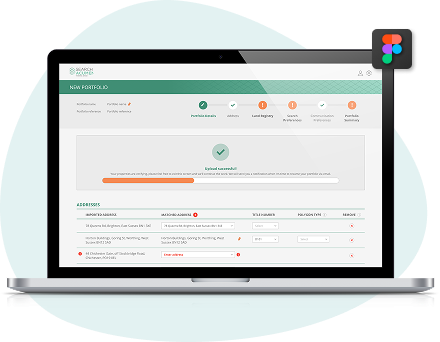
Powering 100,000+ property searches monthly through an AI-driven SaaS platform that automates complex legal processes.

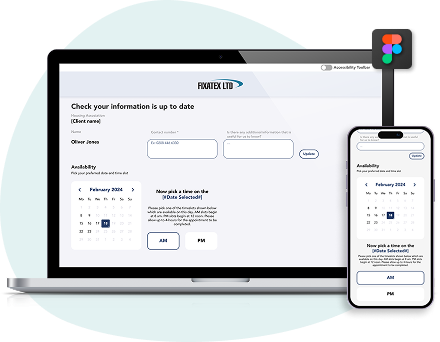
Replacing 100 daily calls with a self-serve booking system delivered in weeks

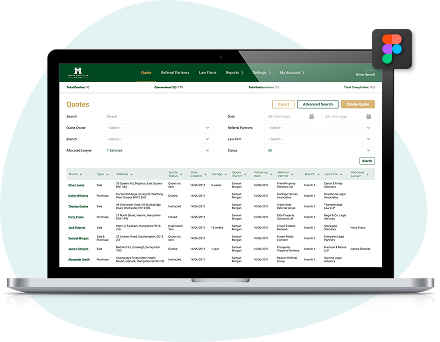
Designing a unified management portal that accelerates property transactions and redefines service in legal tech

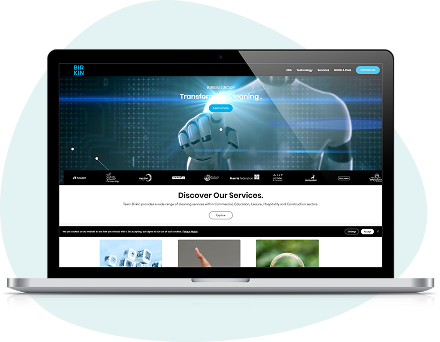
Defining Birkin Group’s digital transformation roadmap through an AI Opportunity Discovery workshop

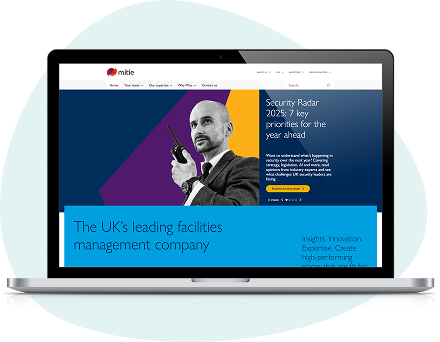
Developing a Lean Six Sigma-driven cleaning management system that cuts process time and resource waste across MITIE’s blue-chip clients
How we build real estate CRM systems
that agents actually use
The most technically correct real estate CRM system in the world is worthless if your agents do not use it. Adoption is not a training problem. It is a design problem. The system has to reflect how agents actually work, which means spending time with them before a single design decision is made. That is where every project starts.
Sales process and relationship mapping
- We spend time with your agents, your managers, and your leadership team mapping how leads actually enter your business, how deals actually progress, and where the current real estate contact management process breaks down in practice rather than in theory.
- This conversation shapes everything. The pipeline stages, the automation rules, the reporting structure, and the mobile interface design all follow from an honest picture of how your team works
System design and agent-tested prototyping
- We design the system around your process, then build interactive prototypes that your agents use before development begins, specifically looking for points where the interface would cause friction in a fast-moving property sales day.
- A realtor CRM that passes a demo but fails in the field is a common and expensive outcome. This step is how we avoid it.
Integration architecture
- We map every system your real estate CRM needs to connect to, portal feeds, marketing platforms, document management, compliance tools, accounting software, and design the integration layer before development begins so it is built in rather than bolted on.
- Integration is where most real estate CRM software projects run into unexpected cost and delay. Designing it properly at the start is the most reliable way to prevent that.
Development in two-week cycles
- Your team sees working software every two weeks. Not a progress update. Working software they can test, push back on, and give feedback that shapes the next stage.
- Real estate agent software that your team has had genuine input into during development is significantly more likely to be adopted after launch than software that appears fully formed on go-live day.
Data migration and go-live
- We migrate your existing realtor database into the new system, run parallel testing against your live operation, and manage the go-live so your agents do not lose access to client history mid-month.
- Cutover planning in a property business requires specific care around live transactions and active client relationships. We treat that as a first-order concern, not an afterthought.
Post-launch development
- The real estate CRM platform that serves a team of twelve needs to behave differently at fifty. As your agency grows, acquires new offices, or moves into new property types, the system needs to keep pace.
- We continue developing alongside you, and the team that built the system is the same team you call when something needs to change.
Book a Free Consultation
with Geeks
You may need a custom build if...
- Leads get lost between systems
- Slow follow-up costs you deals
- Client data leaves with agents
- Generic CRM does not fit property
- You need a property-savvy partner
We have built client management and sales systems across property and adjacent sectors
Property businesses come to us because we have worked in the sector before. We understand how portal data is structured, how AML requirements affect contact management design, and how the relationship between agent and client differs from every other kind of sales relationship.
We have also built systems outside property. Here are some of the sectors where our custom CRM software development and client management teams have delivered.












Awards, partnerships, and certifications















What makes a real estate CRM development partner
different from a real estate CRM vendor
A vendor sells you access to a system. A development partner builds you one. The distinction matters in real estate more than most sectors because the way a successful property business manages client relationships is genuinely specific to that business. The way deals are sourced, progressed, and converted in a boutique residential agency in South London is not the same as in a national commercial brokerage or a new homes sales team.
The businesses that come to Geeks have usually realised that distinction the hard way. Here is what they find when they work with us instead.
Geeks Business Evolution Flywheel
A proven model for compounding results, moving clients through vision, intelligent design, modernisation, and embedded adoption. Backed by multi-award-winning innovations.
The total tech ally for the AI age
We break through the barrier of fragmented suppliers by being your end-to-end partner. From strategy to design, engineering to AI integration, we deliver with the speed and personal attention the Big Four can’t match.
ROI-driven, barrier-breaking transformation
We break through the barrier of vague transformation promises by delivering measurable ROI, solutions proven in £, not just milestones. Guaranteed.
The technologies our real estate CRM teams work with
Every real estate CRM system project has different technical requirements. The portals it connects to, the deal types it needs to model, the team size it needs to support from day one and from year three. We select the tools that fit the problem. As a software development company with 18+ years of production experience, our choices are grounded in what actually performs in a live property sales environment rather than what is currently popular.

Frontend Development
We design interactive and efficient interfaces that enhance user experience and improve application performance.

Backend Development
Our backend systems are designed for scalability, security, and integration with complex enterprise environments.

AI & Machine Learning
We leverage cutting-edge AI and machine learning frameworks to build intelligent solutions that automate processes, uncover insights, and drive business innovation.

Database and Cloud
We build data architectures that support real-time analytics and seamless connectivity across systems.

Mobile Development
We develop custom mobile applications for iOS and Android that maintain consistent performance across devices.

Testing & Quality Assurance
Every product undergoes rigorous testing to ensure stability, reliability, and long-term performance.
Real Estate CRM Development FAQs

A real estate CRM system built for property needs to handle things generic tools treat as edge cases. Portal lead ingestion without manual import. Pipeline stages that reflect the actual legal and practical progression of a property transaction, from enquiry through qualified viewing, offer, solicitor instruction, survey, exchange, and completion. AML compliance workflows built into the contact creation process. Vendor and landlord reporting that reflects the personal nature of the instruction relationship. Real estate contact management that tracks the buyer, their chain, their solicitor, and their communication preferences in one place. Generic CRM platforms add these as plugins. A custom system builds them in from the start.
Real estate lead automation from portals requires API connections to Rightmove, Zoopla, OnTheMarket, Zillow, Realtor.com, and any other portals your business uses. Each portal delivers leads in its own format. A properly built real estate lead management system normalises that data, identifies whether the enquirer already exists in your realtor database, routes the lead to the right agent, and logs the response time. Manual portal lead management is one of the highest-cost inefficiencies in property sales, and it is one of the clearest problems a custom system solves.
Individual real estate agent CRM tools are designed for a single agent managing their own contacts and deals. Real estate team CRM and real estate broker CRM systems need to handle lead distribution across agents, management visibility of individual and team performance, permissions that control what each agent can see and edit, and reporting that rolls up from agent level to office level to business level. A real estate brokerage management software system also needs to handle the relationship between the brokerage and its agents, which is structurally different from the relationship between an agent and their clients. We design for the actual structure of the business rather than applying an individual agent template to a team environment.
Yes, and this is the right question to ask. Real estate automation software that sends generic templated messages to every contact regardless of context will damage client relationships faster than no automation at all. The automation we build is rule-based and context-aware. A buyer who viewed a property last weekend gets a different follow-up than someone who submitted a general enquiry three months ago. A vendor whose property has been on the market for twelve weeks gets different communication than one who instructed last week. Real estate drip campaign software that reflects the actual status and context of each relationship is what automation in property sales should look like.
Compliance requirements in property, particularly AML checks, material information obligations, and data retention rules, need to be built into the real estate client management software rather than managed alongside it. We design compliance workflows into the system architecture at the start. Contact creation triggers the right AML documentation request. Material information is captured and stored against the correct property record. Data retention policies are enforced automatically rather than relying on someone manually deleting records at the right time. Real estate agency CRM systems that treat compliance as a bolt-on are a liability that grows as regulatory requirements tighten.
Yes. CRM for commercial real estate brokers is structurally different enough from residential agency software that applying a residential template produces a system your commercial team will not use. Deal cycles in commercial property run for months or years. The stakeholder relationships are more complex, with investors, occupiers, landlords, solicitors, and advisors all associated with a single transaction. Lease tracking, rent review scheduling, and investor portfolio management are first-order requirements rather than optional modules. Commercial real estate contact management that reflects those realities is what we build.
Yes. The integration requirements for a real estate CRM typically include portal feeds, a marketing email platform, document management, electronic signature tools, accounting software, and in some cases a separate property management system. We map every integration requirement in the discovery phase and design the architecture around them before development begins. Integration failures are the most common reason real estate CRM software projects run over time and budget, and proper planning at the start is the most reliable way to prevent them.
An agent between viewings needs to log a call note, check a buyer's previous viewing history, update a deal stage, and send a follow-up message without sitting down at a laptop. A real estate CRM with app that requires the same number of taps as the desktop version to complete those tasks is an app your agents will stop using within a month. We design the mobile interface around the specific tasks that happen in the field, not a scaled-down version of the desktop. That distinction is the difference between adoption and abandonment.
A focused module, a lead capture and routing system, an automated follow-up engine, or a realtor database software migration, can typically be delivered in eight to twelve weeks. A full real estate CRM system covering contact management, portal integrations, pipeline tracking, automation, mobile access, and reporting typically takes four to eight months depending on the complexity of the deal types and the number of integrations required. We give you a realistic timeline based on your specific situation during the initial consultation.
Book a free consultation. We will spend time understanding your property business, how your team currently manages clients and deals, and where the gaps in your current real estate CRM software are costing you. From there, we will give you an honest view of what the right solution looks like and what building it would involve before you commit to anything.