 +44 203 507 0033
EMR/EHR Software Development Services
Every patient record that passes through a clinical system is connected to a care decision. A system that slows clinicians down, fragments data across departments, or fails to connect with NHS infrastructure is not just an operational headache. It becomes a patient experience problem and, in the worst cases, a clinical risk.
We design and build custom EMR and EHR software solutions for NHS trusts, private hospitals, specialist clinics, and digital health companies. Every system is built for real-world interoperability from day one, with HL7 FHIR, SNOMED CT, and NHS Digital API requirements embedded in the architecture before a line of code is written.
Talk to our Geeks
No commitment. We respond within 1 working day.




EMR and EHR software built right costs less, integrates faster,
and stays in clinical use
The NHS 10 Year Health Plan embeds a clear principle: services will be digital by default. That direction is already visible in the numbers. By March 2025, 92% of NHS trusts in England had implemented electronic patient record systems, with the remaining trusts working toward full coverage by March 2026. NHS England is backing that progress with around £600 million of investment through its Frontline Digitisation and Connecting Care Records programmes in 2025 to 2026 alone. The shift from paper to digital records is no longer a question of if. It is a question of how well the software is built.
The pressure to digitise creates a risk that is easy to overlook: building quickly without building correctly. EHR and EMR systems scoped without NHS Digital API requirements, HL7 FHIR interoperability, and SNOMED CT terminology standards embedded from day one tend to arrive at integration as a problem to solve rather than a design principle already accounted for. The cost of fixing interoperability after the fact consistently outweighs the cost of building it in from the beginning. And the clinical consequences of a system that cannot reliably share data across care settings are not just financial.
The evidence for well-implemented electronic health record development is substantial. NHS England data shows that highly digitised trusts have a 13% lower cost per admitted patient episode and a 17.5% reduction in sepsis mortality compared to less digitally mature peers. Globally, the EHR software development market is projected to reach $40.4 billion by 2030, driven by governments and healthcare providers investing in digital infrastructure that genuinely improves care. Geeks has been building clinical software for over 17 years, working with NHS organisations, private providers, and digital health companies to deliver EHR systems that clinical teams actually use.
$40.4bn
Global EHR market projected
by 2030
Source: P&S Intelligence
92%
NHS trusts in England with EPR systems
by March 2025
Source: NHS England Performance Report
~£600m
NHS investment in EPR and digital records, FY25/26
Source: NHS England Board, 2025
17.5%
Reduction in sepsis mortality at highly
digitised NHS trusts
Source: NHS England Performance Report
What causes EMR and EHR software development projects to fail
NHS interoperability requirements are scoped too late to influence the architecture

Clinical workflows are designed around administrative priorities rather than care delivery
Data migration from legacy EMR systems is treated as a technical task rather than a clinical risk
EHR integration with wider clinical systems creates undocumented data integrity risk
Post-go-live support does not match the complexity of the clinical environment
EMR/EHR development services we deliver
Every EMR/EHR software development engagement covers a different combination of capabilities depending on your NHS interoperability requirements, your clinical environment, and the patient population your system will serve. These are the areas we work in most consistently for NHS trusts, private healthcare providers, and digital health companies.
Custom EHR Software Development
EMR Software Implementation and System Migration
EHR Integration and Interoperability
Clinical Mobile App Development Connected to EHR
AI-powered EHR and Clinical Decision Support
Legacy EMR Modernisation and Re-Platforming
Trusted by 850+ healthcare organisations
and enterprise businesses globally












Healthcare and clinical organisations we have built for

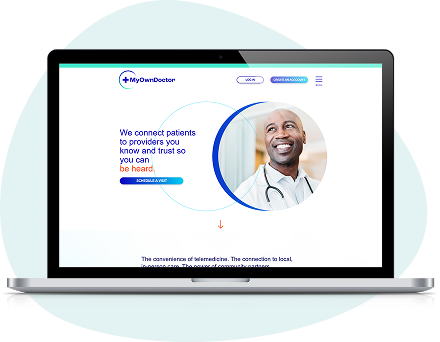
Developing MyOwnDoc, a secure healthcare platform connecting patients and doctors through real-time communication and data access

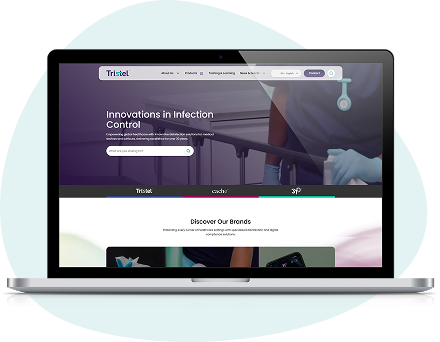
Digitising infection control with a voice-enabled mobile app that reduces cross-contamination risk

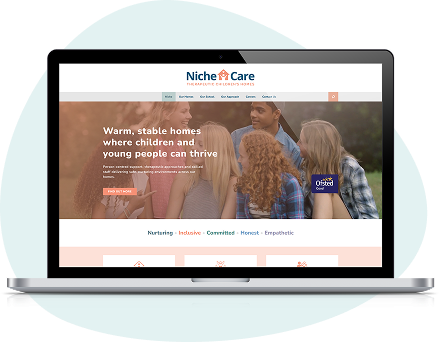
Designing a 12-18 month digital roadmap with 9 workstreams to help Niche Care scale rapidly and improve efficiency

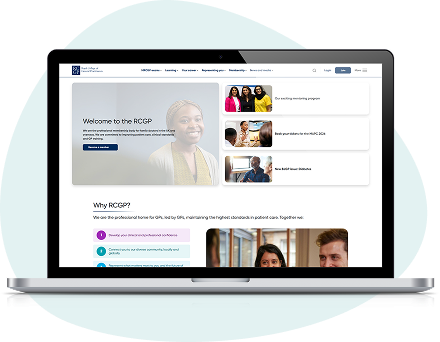
Building a secure ePortfolio platform that supports 42,000 doctors and streamlines the national GP revalidation process
How we structure EMR and EHR software development projects
Every EHR software development engagement starts the same way. We establish your clinical and interoperability requirements before we design your system architecture.
Clinical discovery and workflow mapping
- We map your actual clinical workflows through structured discovery sessions with the clinicians, administrators, and managers who will use the system, not against a generic requirements template that assumes what those workflows look like.
- Every discovery output maps directly to your NHS interoperability obligations, UK GDPR requirements, and data governance framework so the system scope is defined by your clinical reality before any architecture decisions are made.
EHR architecture and integration design
- We design your EHR architecture around your clinical workflow outputs, NHS integration requirements, and data governance obligations using our proprietary wireframing tool VisualSpec.
- Every NHS Digital API, community care system connection, and third-party clinical platform integration is designed and documented in this phase so the integration map drives the development plan rather than being addressed as a downstream task.
EHR system development
- We build your EHR system development in structured sprints with clinical requirements traceability built into every cycle, so every feature can be mapped back to a specific workflow need identified in discovery.
- SNOMED CT coding standards, NHS authentication requirements, and FHIR-compliant data structures are implemented as engineering standards throughout the build, not retrofitted before deployment.
Data migration and integration testing
- We execute every EMR data migration as a structured clinical validation exercise with mapped data structures, automated integrity checks, and a clinician review process for migrated records before any data enters a production environment.
- Integration testing covers every connected system, every data pathway, and every edge case identified in discovery, with documented test evidence for each integration point before the system goes near a live clinical environment.
Clinical validation and go-live support
- We validate the complete system against the clinical workflows defined in discovery, running real-world scenarios with clinical staff before go-live to surface issues in a controlled environment rather than in a live clinical setting.
- Go-live is supported by a dedicated Geeks team available throughout the cutover period, with a defined escalation process for any system issues that emerge in the first days of live clinical operation.
Post-launch support and iteration
- We maintain the EHR systems we build, managing updates, new integration requirements, and NHS standards changes through a structured change management process that preserves data integrity and interoperability compliance across every release.
- Clinical software generates real feedback from day one of live operation. We capture it systematically and feed it into a prioritised iteration roadmap so the system improves continuously based on what clinical teams are experiencing in practice.
Hear it from the people we have worked with

Our project was delivered on time and within scope and budget. We are very impressed with the outcome and very happy with our product.Read full story

Geeks provided clarity on critical facets of our business that required attention, aligning with our strategic objectives. This has not only fueled our roadmap but has become the cornerstone of our strategic planning. We’ve made significant strides in understanding the 'art of what's possible,' turning potential into actionable steps toward innovation and growth.Read full story

We wouldn't exist without Geeks' support.Read full story

Geeks has injected a new vigour into our digital transformation. The experience has been friendly, thorough and taken all of the staff on the journey. We look forward to the next exciting steps.Read full story

I want to congratulate everyone involved in this – it truly is genius in its transparency and simplicity. The platform is incredibly intuitive, which is critical with any new technological solution.Read full story

After more than 3 years of using their services extensively, I can safely say that Geeks are in a different league to most software developers you will find.Read full story
Awards, partnerships, and certifications














The technologies our EMR and EHR
software development teams work with
Every EHR software development engagement has its own technical requirements depending on your clinical environment, your integration landscape, and your NHS interoperability obligations. We select tools that fit your specific clinical and technical situation.

Frontend Development
We design interactive and efficient interfaces that enhance user experience and improve application performance.

Backend Development
Our backend systems are designed for scalability, security, and integration with complex enterprise environments.

AI & Machine Learning
We leverage cutting-edge AI and machine learning frameworks to build intelligent solutions that automate processes, uncover insights, and drive business innovation.
Database and Cloud
We build data architectures that support real-time analytics and seamless connectivity across systems.

Mobile Development
We develop custom mobile applications for iOS and Android that maintain consistent performance across devices.
Testing & Quality Assurance
Every product undergoes rigorous testing to ensure stability, reliability, and long-term performance.
Book a Free Consultation
with Geeks
- You'll love working with Geeks if…
- You're a changemaker
- You're not afraid to explore new ideas with a proven partner
- You treat technology as an investment
- You're eager to disrupt your industry with technology
What separates Geeks from other EHR/EMR
software development companies
Choosing an EHR/EMR development company for a clinical environment means choosing a partner who understands that your software is not just a business tool. It is infrastructure that clinicians depend on to make care decisions. The difference between an EMR development company that builds software and one that builds clinical software is the same as the difference between a system your team adopts willingly and one that generates workarounds from its first week in live use. Here is what every EHR software development company engagement with Geeks is built on.
Geeks Business Evolution Flywheel
A proven model for compounding results, moving clients through vision, intelligent design, modernisation, and embedded adoption. Backed by multi-award-winning innovations.
The total tech ally for the AI age
We break through the barrier of fragmented suppliers by being your end-to-end partner. From strategy to design, engineering to AI integration, we deliver with the speed and personal attention the Big Four can’t match.
ROI-driven, barrier-breaking transformation
We break through the barrier of vague transformation promises by delivering measurable ROI, solutions proven in £, not just milestones. Guaranteed.
EMR/EHR Software Development FAQs

An electronic medical record (EMR) is a digital version of a patient's clinical record within a single organisation or practice. It captures the clinical data generated within that specific care setting: diagnoses, medications, test results, and clinical notes. An electronic health record (EHR) is designed to go further, aggregating patient information across multiple care settings and organisations to give a more complete picture of a patient's health history. In practice the terms are often used interchangeably, but the distinction matters for system architecture. EHR software designed for interoperability across care settings requires a different data model, API architecture, and integration strategy than an EMR built to serve a single practice.
Timeline depends on the complexity of your clinical workflows, the number and nature of your integration requirements, your NHS interoperability obligations, and the volume of data migration involved. A focused custom EHR platform for a single speciality with limited integrations can be delivered in months. A multi-site EHR system with NHS Digital API integration, legacy EMR data migration, AI-powered decision support, and comprehensive clinical validation takes considerably longer. Every project is scoped in detail before development begins so you have a realistic timeline that reflects your actual clinical and technical requirements rather than a generic estimate.
Yes. EHR integration with NHS infrastructure is a core part of what we do for UK healthcare clients. We build integrations with NHS Login, GP Connect, the National Record Locator Service, NHS Notify, and other NHS Digital APIs using HL7 FHIR R4 as the interoperability standard. Every integration is designed as a validated workstream with documented data flows, end-to-end testing, and clinical review before any integration goes live. We do not treat NHS API integration as a configuration task. We treat it as a clinical engineering workstream with the same rigour as any other part of the system build.
HL7 FHIR (Fast Healthcare Interoperability Resources) is the international standard for exchanging healthcare information electronically. It defines how clinical data is structured, stored, and shared between different systems, making it possible for an EHR to communicate reliably with NHS infrastructure, laboratory systems, pharmacy platforms, and community care records. NHS England has mandated FHIR R4 as the required standard for NHS API integration, which means any EHR system that will connect to NHS infrastructure needs FHIR-compliant data structures built into it from the ground up. EHR FHIR development that retrofits compliance onto a finished system consistently creates integration problems and data integrity risk that surface in live clinical use.
Data protection compliance is designed into the architecture of every EHR software development engagement from the first design session. We build against UK GDPR technical requirements, the NHS Data Security and Protection Toolkit, and NHS Digital's Data Security Standards. That means access controls, audit logging, data minimisation, encryption in transit and at rest, and role-based data access are built into the system design before development begins rather than added as a compliance layer after the system is built. We work with your information governance team throughout the project to ensure every data handling decision is documented and defensible.
Yes. EMR data migration is a structured part of our EHR implementation work. We approach every migration as a clinical risk exercise, not a technical one. That means mapping every data structure from your legacy system to the new EHR, identifying SNOMED CT mapping gaps and unmapped clinical fields, building automated integrity checks, and running a clinician review process for migrated records before any data enters a production environment. We do not consider a migration complete until clinical staff have validated the accuracy of migrated records in a controlled testing environment.
Yes. We build AI capabilities into EHR platforms for clinical risk scoring, predictive deterioration alerts, pathway decision support, and automated clinical coding. Every AI feature we build for a clinical context is designed with full auditability, so clinicians can see the basis for any AI-generated recommendation and override it where their judgement requires. AI capabilities are built as validated, documented components of the EHR system rather than as external tools plugged into the side of it.
EMR implementation covers the full process of deploying a new or replacement clinical records system into a live healthcare environment. That includes system configuration and build, data migration from existing platforms, integration with connected clinical systems, staff training and change management, clinical validation testing, a structured go-live cutover, and post-launch support. The complexity varies significantly depending on organisation size, the number of clinical sites, data migration volume, and the number of system integrations required. We scope every implementation in detail before it begins so your team has a clear view of the timeline, the resources required, and the clinical risk management approach for the transition.
We start with a conversation about your clinical environment, your current systems, your interoperability requirements, and your goals for the project. From that conversation we run a structured discovery and produce a detailed proposal covering scope, approach, timeline, and cost. No commitment is required for that initial conversation. You can book directly at geeks.ltd/book-a-meeting.