 +44 203 507 0033
Telemedicine App Development Company
Patients expect to access healthcare on their terms. Clinicians need tools that keep up with how they actually deliver care. The gap between those two realities is where most telemedicine software development projects fall short, built around a product concept rather than a clinical environment, and launched before anyone has tested it with real patients on real connections in real clinical conditions.
We are a telemedicine app development company building custom telehealth app development solutions for private clinics, NHS-commissioned services, specialist providers, and digital health companies across the UK. Every telemedicine app development solution we deliver is designed around actual clinical workflows, real NHS integration requirements, and the patients who will use it, not the demo environment where it looked good.
Talk to our Geeks
No commitment. We respond within 1 working day.




Telemedicine demand is growing faster than the platforms serving it
The NHS 10 Year Health Plan puts digital-first care at the centre of how primary care is delivered across England. That policy direction is already visible in the data. A third of all GP appointments in England were delivered remotely in June 2025, rising from 28.3% in June 2023, according to NHS data analysed by PA Media. In September 2025 alone, NHS England recorded 6.5 million online consultation requests submitted to GP practices, up 48% on the same month the previous year. From October 2025, every GP practice in England is required to keep its online consultation platform open during working hours. The infrastructure demand that creates for telehealth software solutions that genuinely work in clinical environments is significant.
The global telehealth and telemedicine market stood at $94.14 billion in 2024 and is projected to reach $180.86 billion by 2030, according to MarketsandMarkets. The UK telemedicine market alone is forecast to reach approximately $13 billion by 2030, growing at 15.6% CAGR from 2025 to 2030. That growth is being built on telemedicine software solutions that genuinely support clinical delivery. Most of the telemedicine software development capacity in the UK sits in generic app studios with no understanding of NHS infrastructure, clinical safety requirements, or what a teleconsultation software platform needs to do on a busy clinical day. The gap between what the market needs and what most telemedicine software development companies are equipped to build is where platforms fail.
Geeks has been building clinical and healthcare software for over 18 years, working with NHS organisations, private providers, and digital health companies to deliver telemedicine app development solutions that clinical teams actually use. We build from clinical discovery outwards, not from a feature list inwards, so the platform your clinicians receive reflects the workflows they described in discovery, integrates with the NHS systems they already use, and carries patient data with the security a regulated clinical environment demands.
$180.8bn
Global telehealth and telemedicine market projected by 2030
Source: MarketsandMarkets, 2025
~$13bn
UK telemedicine market projected by 2030 at 15.6% CAGR
Source: Grand View Research
6.5m
Online GP consultation requests in September 2025, up 48% year-on-year
Source: NHS England
33.3%
GP appointments in England delivered remotely, June 2025
Source: PA Media / NHS data
Why most telemedicine platforms underperform in
real clinical environments
Video infrastructure built for meetings cannot carry clinical consultations

Patient verification and session audit trails get deprioritised and never catch up
Telehealth app development projects routinely misclassify their regulatory status
Telemedicine integration with NHS systems is planned last and costs the most to fix
Accessibility and low-bandwidth performance are treated as optional extras
Telemedicine app development solutions built for healthcare providers
and digital health companies
Every telemedicine platform we build covers a different combination of capabilities depending on your clinical model, your patient population, and your NHS integration requirements. These are the areas we work in most consistently for private providers, NHS-commissioned services, and digital health companies bringing telehealth products to the UK market.
Custom Telemedicine App Development
Video Consultation Platform Development
Remote Patient Monitoring Software
Telehealth Web and Mobile Platforms
Telemedicine EHR Integration and NHS Connectivity
Telehealth SaaS and White-label Platforms
Trusted by 850+ healthcare organisations
and enterprise businesses globally












Healthcare and clinical organisations we have built for

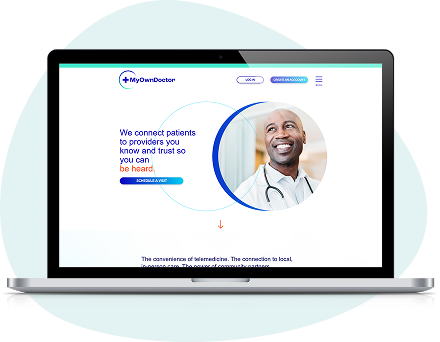
Developing MyOwnDoc, a secure healthcare platform connecting patients and doctors through real-time communication and data access

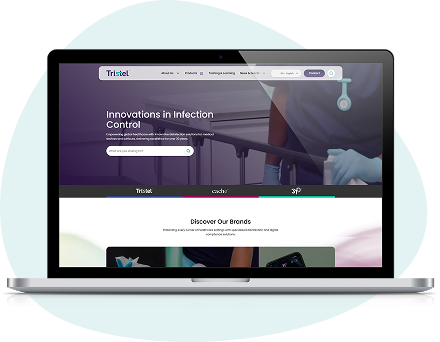
Digitising infection control with a voice-enabled mobile app that reduces cross-contamination risk

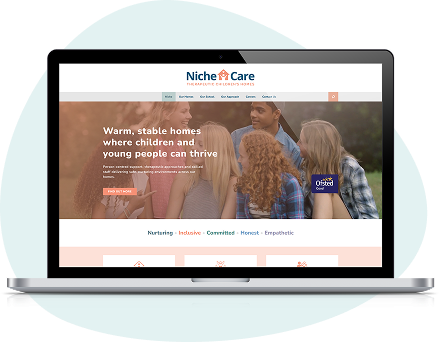
Designing a 12-18 month digital roadmap with 9 workstreams to help Niche Care scale rapidly and improve efficiency

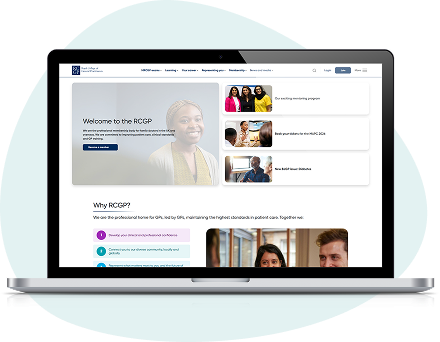
Building a secure ePortfolio platform that supports 42,000 doctors and streamlines the national GP revalidation process
From clinical scoping to a live telemedicine
platform, how we build it
Every telemedicine app development project starts with your clinical environment, not our technology preferences. Before a wireframe is drawn, we understand your regulatory position, your NHS integration requirements, and how your clinicians actually deliver remote care.
Clinical and regulatory scoping
- We determine your regulatory position before any architecture decisions are made. If your telemedicine platform supports clinical decision-making or integrates diagnostic data from connected monitoring devices, we establish whether it falls under MHRA SaMD classification and what that means for the development process.
- We map your clinical workflows, patient population, NHS integration landscape, and data governance obligations through structured discovery sessions so the platform we design is shaped by your clinical reality from the first day of the project.
Platform architecture and UX design
- We design your telemedicine platform architecture around your clinical workflow outputs, video infrastructure requirements, NHS integration landscape, and data governance obligations using our proprietary wireframing tool VisualSpec.
- Every UX decision is tested against real clinical scenarios, not just usability principles, so the interfaces your clinicians and patients encounter on launch day reflect how care is actually delivered in your setting rather than how it was imagined during a design sprint.
Core telemedicine platform development
- We build your telemedicine platform in structured sprints with clinical requirements traceability maintained throughout, so every feature delivered maps back to a specific workflow need or compliance requirement identified in the clinical discovery phase.
- Video infrastructure, identity verification, session documentation, consent management, and secure data handling are built as core platform components in the main development cycle, not sourced and connected as third-party integrations after the primary build is complete.
NHS and EHR integration
- We build every NHS system connection, telemedicine EHR integration, and third-party clinical data feed as a validated workstream with documented data flows and end-to-end testing across all connected systems and clinical user scenarios.
- Telemedicine EMR and EHR integration is tested against real clinical workflows involving data created and accessed by actual clinical users, not just API call and response checks in an isolated test environment.
Clinical, performance, and security testing
- We test your telemedicine software platform against real clinical use scenarios, including poor network conditions, high concurrent user loads, edge-case patient profiles, and the full accessibility requirements of your patient population.
- Penetration testing, data security review, and UK GDPR compliance validation are executed as structured workstreams before go-live, not as a checklist run through in the final week of a development sprint.
Launch, onboarding, and iteration
- We plan your go-live as a structured programme with clinical staff onboarding, a monitored soft launch period, and a defined escalation process for any system or clinical issues that emerge in the first weeks of live operation.
- Telemedicine platforms evolve rapidly once real patients and clinicians start using them. We capture that feedback systematically from day one and feed it into a prioritised iteration roadmap so the platform improves continuously based on real clinical experience rather than assumptions made before launch.
Hear it from the people we have built for

Our project was delivered on time and within scope and budget. We are very impressed with the outcome and very happy with our product.Read full story
Geeks provided clarity on critical facets of our business that required attention, aligning with our strategic objectives. This has not only fueled our roadmap but has become the cornerstone of our strategic planning. We’ve made significant strides in understanding the 'art of what's possible,' turning potential into actionable steps toward innovation and growth.Read full story
We wouldn't exist without Geeks' support.Read full story
Geeks has injected a new vigour into our digital transformation. The experience has been friendly, thorough and taken all of the staff on the journey. We look forward to the next exciting steps.Read full story
I want to congratulate everyone involved in this – it truly is genius in its transparency and simplicity. The platform is incredibly intuitive, which is critical with any new technological solution.Read full story
After more than 3 years of using their services extensively, I can safely say that Geeks are in a different league to most software developers you will find.Read full story
Awards, partnerships, and certifications













The technologies our telemedicine app development teams
work with
Every telemedicine platform has a different technical shape depending on your clinical model, your patient population, and your NHS integration landscape. We select the right tools for your specific clinical and product requirements rather than applying a fixed stack to every engagement.
Frontend Development
We design interactive and efficient interfaces that enhance user experience and improve application performance.

Backend Development
Our backend systems are designed for scalability, security, and integration with complex enterprise environments.
AI & Machine Learning
We leverage cutting-edge AI and machine learning frameworks to build intelligent solutions that automate processes, uncover insights, and drive business innovation.
Database and Cloud
We build data architectures that support real-time analytics and seamless connectivity across systems.
Mobile Development
We develop custom mobile applications for iOS and Android that maintain consistent performance across devices.
Testing & Quality Assurance
Every product undergoes rigorous testing to ensure stability, reliability, and long-term performance.
Book a Free Consultation
with Geeks
- You'll love working with Geeks if…
- You're a changemaker
- You're not afraid to explore new ideas with a proven partner
- You treat technology as an investment
- You're eager to disrupt your industry with technology
What makes Geeks a different kind of telehealth app development company
Most telemedicine software companies build platforms. Geeks builds platforms that work in clinical environments. That is a different starting point, and it produces a different outcome. We are not telemedicine software vendors adapting a generic product for each new client. We are a telehealth software development company that starts every engagement from your clinical workflows, your regulatory position, and your NHS integration requirements. Telemedicine software providers who skip that process tend to deliver platforms that require substantial rework before they can carry real patients safely. Our telehealth consulting services begin before architecture, because the decisions made in discovery determine whether your platform survives its first live clinical shift. That commitment is what separates a reliable telehealth app development company from one that delivers a working prototype and calls it done.
Geeks Business Evolution Flywheel
A proven model for compounding results, moving clients through vision, intelligent design, modernisation, and embedded adoption. Backed by multi-award-winning innovations.
The total tech ally for the AI age
We break through the barrier of fragmented suppliers by being your end-to-end partner. From strategy to design, engineering to AI integration, we deliver with the speed and personal attention the Big Four can’t match.
ROI-driven, barrier-breaking transformation
We break through the barrier of vague transformation promises by delivering measurable ROI, solutions proven in £, not just milestones. Guaranteed.
Telemedicine App Development FAQs
sA core telemedicine software platform needs secure video consultation, appointment scheduling, patient identity verification, consent management, session documentation, and secure messaging as standard. Depending on your clinical model, you may also need remote patient monitoring, e-prescription capability, multi-clinician workflows, telemedicine EHR integration, and patient-facing health record access. Telemedicine app features vary significantly by clinical speciality and patient population. A mental health telemedicine platform has different session documentation and escalation requirements to a post-operative follow-up service or a chronic disease management programme. We scope telemedicine software features around your specific clinical model rather than applying a standard feature list.
sTelemedicine software refers specifically to platforms supporting remote clinical consultations between patients and healthcare professionals. Telehealth software is a broader category that includes telemedicine but also covers patient monitoring, health education, administrative healthcare services, and wellness platforms that do not involve direct clinical interaction. In practice, most telemedicine and telehealth software development projects combine elements of both: a remote consultation platform that also captures monitoring data, delivers patient communications, integrates with clinical records, and supports a care pathway that extends beyond the individual consultation.
sTimeline depends on the complexity of your clinical model, the number and nature of your NHS integrations, whether your platform falls under MHRA Software as a Medical Device classification, and the scope of your patient-facing features. A focused teleconsultation platform for a single speciality with limited integrations can be delivered in months. A full telehealth SaaS product with remote patient monitoring, telemedicine EMR integration, multi-tenancy architecture, and clinical validation testing takes considerably longer. Every engagement is scoped in detail before development begins so you have a timeline that reflects your actual clinical and technical requirements.
sIt depends on what the platform does. A telemedicine application managing administrative access to a clinical consultation is unlikely to meet the MHRA definition of a Software as a Medical Device. A platform that analyses patient-submitted symptom data to support a diagnosis, integrates readings from connected monitoring devices into a clinical decision workflow, or provides clinical risk scoring based on patient data may fall within the SaMD definition and require MHRA registration and IEC 62304-compliant development. We assess regulatory classification at the start of every telehealth app development project, before any architecture decisions are made.
sYes. We build HIPAA telemedicine software solutions for clients operating in US markets and UK GDPR-compliant telehealth platforms for UK providers. Data protection compliance is designed into the architecture from the first session, covering encryption in transit and at rest, role-based access controls, audit logging, data minimisation, and the consent management requirements of your specific clinical and regulatory context. For platforms operating across both UK and US markets, we design a unified data architecture that satisfies both regulatory frameworks without separate codebases.
sYes. Telemedicine integration with NHS infrastructure is central to how we build for UK healthcare providers. We connect telemedicine platforms to NHS Login, GP Connect, the National Record Locator Service, and existing EHR and EMR systems using HL7 FHIR R4. Every telemedicine data integration is designed as a validated workstream with documented data flows and end-to-end clinical testing. NHS integration is not an optional roadmap item in our engagements. It is a day-one architecture requirement.
sYes. Remote patient monitoring app development is a core part of our telehealth offering. We build monitoring capabilities that connect wearable devices, home health equipment, and patient-reported data to a clinical dashboard integrated with your telemedicine platform. Every remote patient monitoring software development engagement is scoped around your clinical monitoring protocols, your alert and escalation workflows, and the regulatory requirements that apply to the device data your platform will process.
sTelehealth SaaS is a software-as-a-service delivery model where a telemedicine platform is hosted centrally and delivered to multiple healthcare providers or clinical teams on a subscription basis. It suits digital health companies building a product to sell to NHS trusts, clinical networks, or private providers, and larger healthcare organisations wanting to deliver a branded virtual care experience across multiple sites without building separate infrastructure for each. Telemedicine SaaS architecture requires multi-tenancy, configurable clinical workflows, and robust data isolation between tenants built in from the first sprint. We design that architecture before development begins rather than retrofitting it when the client base grows.
The cost of telemedicine app development depends on the scope of your platform, the number of NHS integrations required, your regulatory position, and whether you are building a focused teleconsultation tool or a full telehealth SaaS product with remote monitoring and multi-tenancy. A straightforward custom telemedicine application for a single speciality with limited integrations will sit at a different price point to a white-label telemedicine SaaS solution built to scale across multiple providers. Every Geeks engagement is scoped in detail before development begins, so you receive a fixed cost that reflects your actual clinical and technical requirements rather than a ballpark figure that shifts mid-project. Get a scoped estimate for your platform.
For patients, the requirements are minimal: a smartphone, tablet, or computer with a camera, a stable internet connection, and access to the telehealth software application. For providers, the requirements run deeper. You need a telemedicine platform that meets NHS Digital security standards, UK GDPR requirements, and CQC obligations if you are delivering regulated clinical activities. You also need clinical workflows mapped to the platform, staff trained on remote consultation practice, and the right integrations in place so patient records created during virtual appointments are as complete and accessible as those from in-person care. Getting those foundations right before launch determines whether your platform is adopted or abandoned.
A patient requests an appointment through the telemedicine platform, either via a telehealth services app, a web portal, or an NHS-connected booking system. The platform sends confirmation and a secure link for the consultation. At the scheduled time, the patient joins a video or audio session with their clinician. During the consultation, the clinician accesses the patient's records, documents clinical notes, and where applicable issues referrals or e-prescriptions directly within the telemedicine software. The completed consultation record is stored securely and, in a well-integrated platform, synced back to the patient's EHR. Remote patient monitoring solutions extend this further, feeding continuous health data from connected devices into the clinical dashboard between scheduled appointments.
The advantages are well evidenced. Telemedicine solutions reduce the time and cost of accessing care, improve continuity for patients managing chronic conditions, and extend clinical reach to patients in rural or underserved areas. Research from Imperial College London found that virtual GP consultations produce clinical outcomes that match face-to-face appointments for a range of conditions including mental health, weight management, and smoking cessation. For providers, telehealth software solutions reduce no-show rates and give clinical teams more flexible ways to manage appointment demand.
The disadvantages are real and worth designing around rather than dismissing. Telemedicine app features cannot replicate a physical examination, which means some clinical presentations genuinely require an in-person appointment. Patients with low digital literacy, older hardware, or poor connectivity face access barriers that poorly built platforms make worse rather than better. Data security is a genuine concern if the telemedicine software development behind the platform has not been built to NHS Digital standards and UK GDPR from the ground up. And if the platform is not properly integrated with existing clinical records, it creates documentation gaps that carry clinical risk. The difference between a telemedicine platform that delivers on its promise and one that creates problems is almost always in how it was built, not in the concept itself.
We start with a conversation about your clinical model, your target patient population, your NHS integration requirements, and your regulatory position. From that conversation we run a structured discovery and produce a detailed proposal covering scope, approach, timeline, and cost. No commitment is required for that initial conversation. You can book directly at geeks.ltd/book-a-meeting.