Series: Infinite Vision: Envision the future of your business with AI
Explore visionary strategies to harness AI for long-term transformation. This series focuses on how leaders can craft a future-ready business that thrives in the age of AI.
Enterprise operations generate constant signals, but much of this data never reaches decision-makers in time. Enterprise IoT makes physical operations observable at scale, turning real-world activity into reliable insight that supports better decisions and long-term operational intelligence.
Read more
Encryption plays a critical role in how modern systems protect sensitive data and maintain trust. Understanding the different types of encryption helps organisations secure applications, meet compliance requirements, and design systems that scale without exposing critical information.
Read more
Planning a software development project is one of the most critical factors in determining delivery success. Without clear structure around scope, timelines, and responsibilities, even well-built software can miss its mark.
Read more
Choosing between Java and Python is a practical decision that shapes how software is built, scaled, and maintained. This guide breaks down their real-world differences to help teams choose with confidence.
Read more
A Statement of Work (SOW) is one of the most important documents in software development, yet it is often misunderstood or poorly defined. When done right, a SOW creates clarity around scope, cost, timelines, and responsibilities, setting the foundation for predictable delivery and successful outcomes across complex software projects.
Read more
A Proof of Concept (PoC) is a quick test to see if your software idea can actually be built. It helps you find big technical risks before you spend your full budget. This is vital because research from the Standish Group shows that only 16.2% of software projects are finished on time and on budget. By starting with a PoC, you save time and money by proving...
Read more
Choosing between React and Angular is a common challenge for teams building modern applications. Both frameworks are mature, widely adopted, and suited to different use cases. This guide breaks down their key differences to help developers, architects, and decision-makers choose the right framework with confidence.
Read more
The SDLC stages define how software moves from an initial idea to a reliable, production-ready system. Rather than being a rigid process, the software development lifecycle provides a structured framework that helps teams manage complexity, reduce risk, and maintain quality at every step. This guide explains how the stages of software development work in...
Read more
The spiral development model is a risk-driven approach to software development that delivers work in iterative cycles rather than a fixed linear flow. It is commonly used for complex projects where requirements and technical decisions need early validation.
Read more
Most digital transformations fail because teams lack clarity, alignment, and the capacity to redesign complex systems. Consulting firms provide the structure and technical depth needed to turn broad ambition into a clear, evidence-led plan that delivers measurable results.
Read more
Customer service teams are under pressure from rising enquiry volumes and increasing operational costs. Conversational AI offers a practical way to reduce this strain by automating routine interactions, improving response times, and helping teams deliver faster, more accurate support at scale.
Read more
AI is changing how financial institutions manage risk, support customers, and process information. This article outlines how AI is used across banking, fintech, and insurance, and the safeguards needed to use it reliably.
Read more
Generative AI can transform how organisations work, but only when its impact is measured with clarity and discipline. This article explains how consultants evaluate generative AI performance, define real value, and assess whether the technology is ready to scale across the business.
Read more
AI automation can improve speed, cut manual work, and strengthen decisions. This guide shows how to implement it the right way by preparing your data, mapping processes, selecting the right tools, and scaling with measurable results.
Read more
User-centred design is the foundation of successful mobile app development. By focusing on real user needs and behaviour, it transforms apps into intuitive, high-performing experiences that drive engagement and business growth.
Read more
Digital transformation often stalls without the right data foundation. This article explains the difference between transformation and AI Evolution, showing why a strong data strategy is the key to unlocking measurable ROI and long-term success.
Read more
AI agents go beyond chatbots and RPA by combining autonomy, perception, reasoning, and action. They deliver faster decisions, scalable processes, and measurable ROI. This article explores their traits, adoption steps, risks, and how they are redefining the future of work.
Read more
Recruitment is people-driven, but its processes are often slow and fragmented. AI agents are changing that. From CV screening to compliance, they streamline workflows, improve candidate engagement, and give recruiters the time to focus on building real relationships.
Read more
Psychologically enhanced AI agents combine intelligence with personality and emotion models to create more consistent, human-aligned interactions. Unlike traditional AI, they build trust and engagement, making them a powerful step toward human-centric AI adoption.
Read more
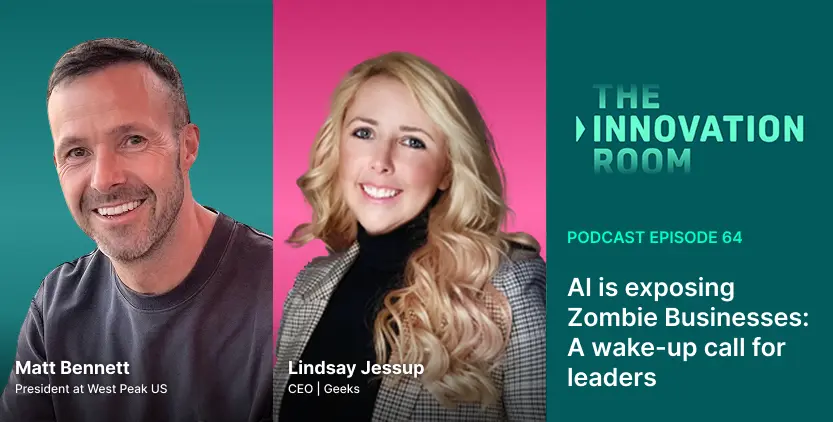
Zombie businesses look busy but fail to innovate or scale. In the age of AI, leadership determines whether an organisation thrives or quietly decays.
Read more
In this episode of The Innovation Room, Lindsay Jessup sits down with Matt Bennett to uncover the warning signs of a zombie business, and what today’s leaders must do to avoid becoming one.
Listen
Digital maturity defines how ready an organisation is to innovate and scale in today’s economy. Yet many still rely on outdated, subjective assessments that fail to show the full picture. AI is changing that. By analysing live data, it delivers accurate, continuous insights that turn maturity from a static score into a strategic advantage.
Read more
RPA helped enterprises automate repetitive tasks, but its limits are clear. Bots break, cost too much to maintain, and cannot adapt when processes change. AI agents are the next stage. They learn, adapt, and make decisions in complex environments, bringing resilience and scalability that RPA cannot match. This article explains why AI agents will replace RPA...
Read more
Procurement delays slow projects and inflate costs. Procurement 2.0 changes this with AI agents that negotiate, order, and track materials in real time, giving teams faster workflows, better accuracy, and full supply chain visibility.
Read more
See how AI agents are reshaping customer experience across industries by enabling faster responses, smarter interactions, and scalable personalisation.
Read more
AI is changing how schools manage content, communication, and operations. This guide helps school leaders assess if their CMS is ready to support AI-driven tools.
Read more
Discover how AI is used in retail industry to optimise inventory demand forecasting and supply chain operations for faster decisions smarter margins and lower costs.
Read more
What is the key to leading organisational change and embracing complexity? Join Sunil Mundra, Org. Change and Transformation Leader, in The Innovation Room podcast where we uncover frameworks and philosophies to build an agile, adaptive business ready for breakthrough growth.
Listen
In the first installment of our Summer Podcast Series for the Innovation Room: 'AI - Return on Change' we explore the behaviour adaptions needed to embrace change.
Listen
The right software can remove friction from day-to-day operations, but not every tool fits the way your business actually works. Off-the-shelf platforms can be a good starting point, yet bespoke software is built around your workflows, data, and growth plans. Here are five benefits of buying bespoke software over off-the-shelf solutions.
Read more
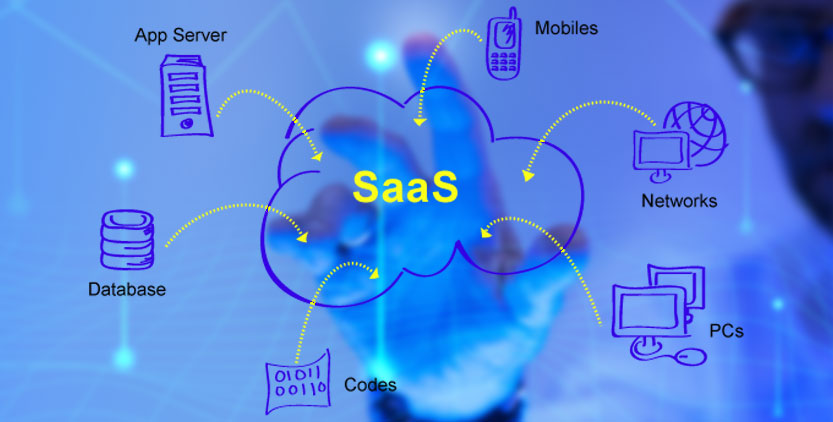
Web-based applications are transforming how businesses operate, making systems more accessible, scalable, and secure than traditional desktop software.
Read more